Short answer
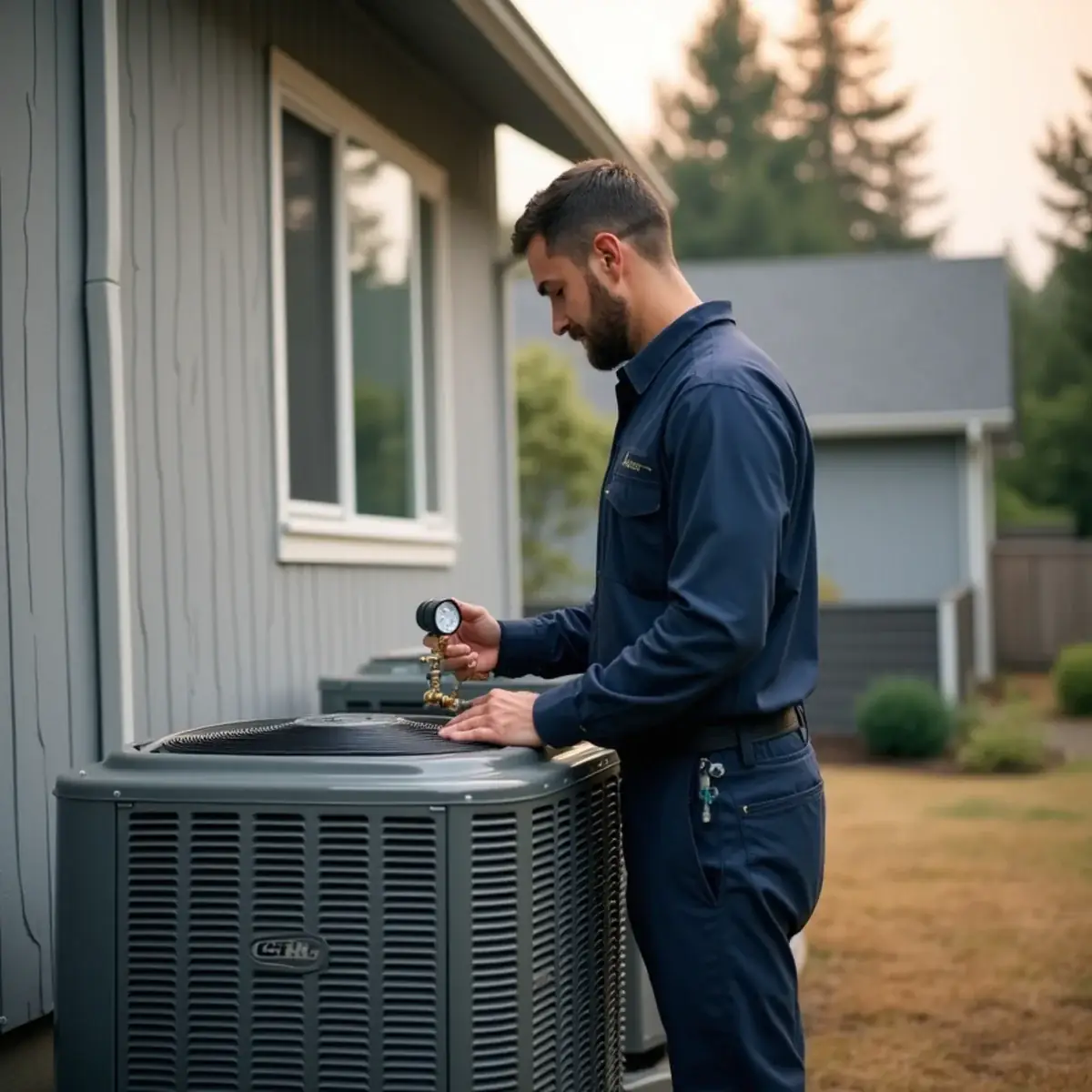
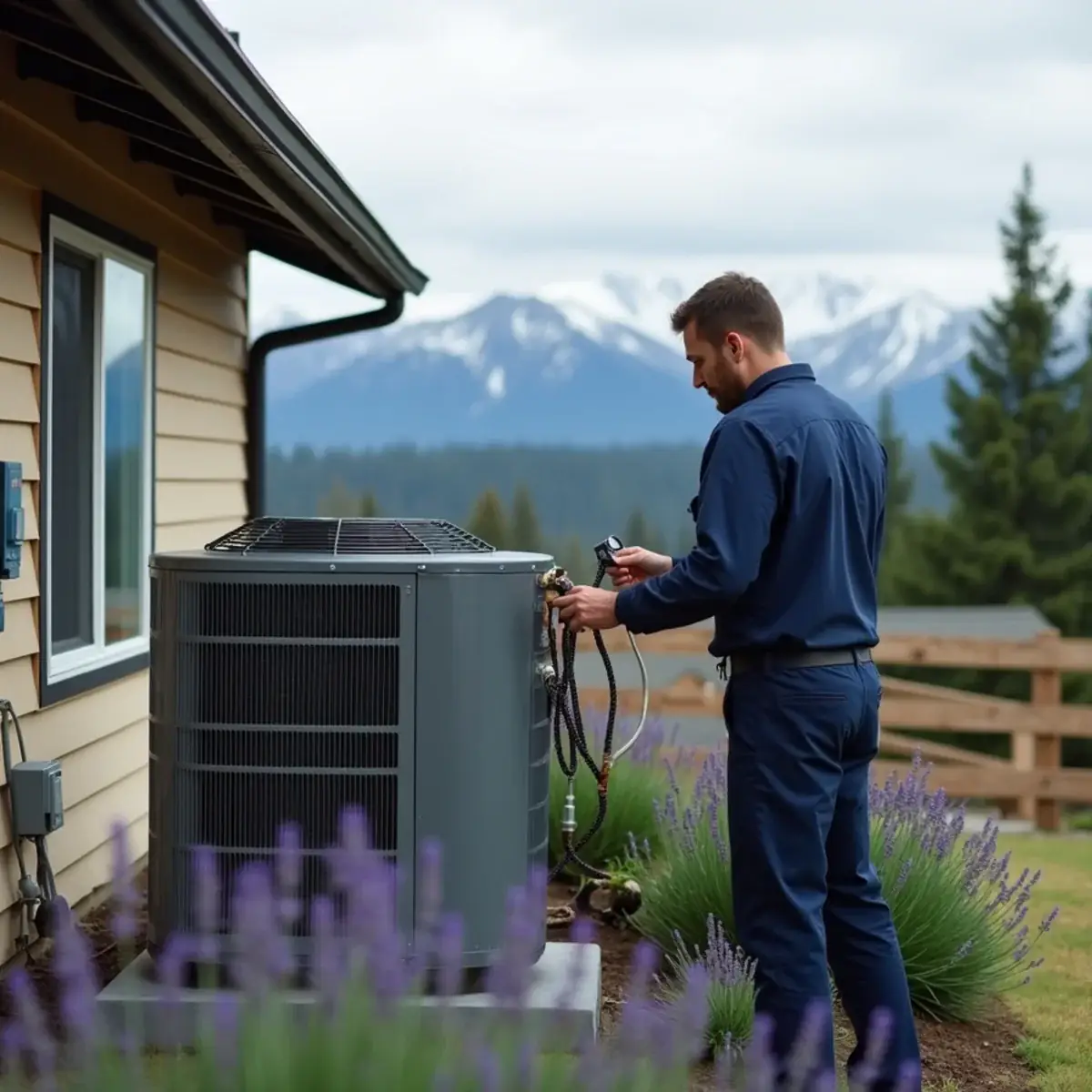
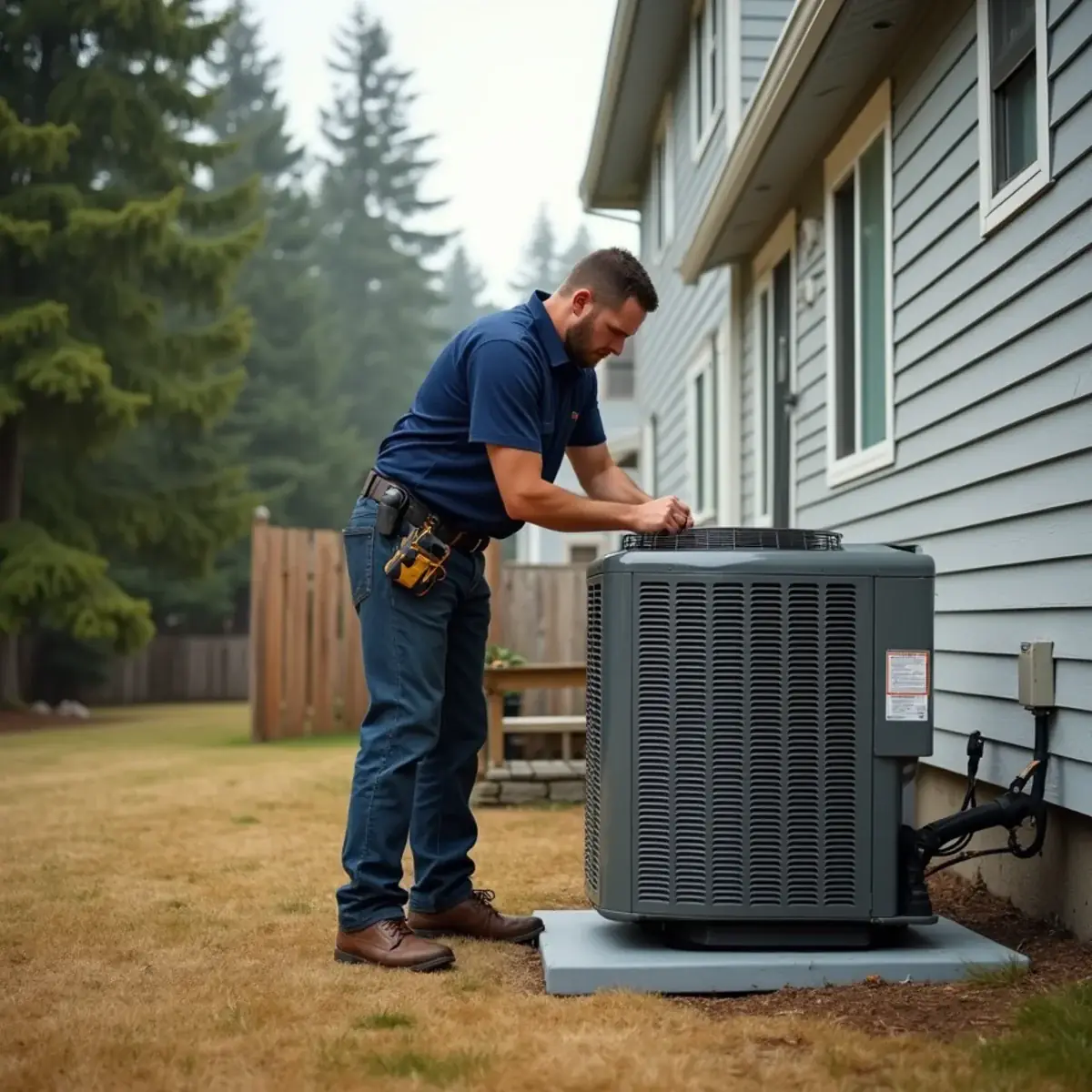
AC installation in Bremerton, WA usually means adding a matched coil and outdoor condenser to the furnace and ducts you already have, or installing a heat pump that cools in summer and heats the rest of the year. We size it from a Manual J cooling load, confirm the blower can move the air, and commission it with recorded readings.
Ten years ago most Bremerton homeowners got by with a box fan and a cool evening breeze off the water. That changed with the June 2021 heat dome, when temperatures across Puget Sound topped 100°F, and with late-summer smoke seasons that make opening windows a bad idea. Our AC installation in Bremerton, WA work has grown right along with those summers.
Most homes here have a gas furnace and ducts but no cooling, which makes adding central air fairly direct: a coil on the furnace, a condenser outside and a line set between them. The bigger question is whether that outdoor unit should be a straight air conditioner or a heat pump that cuts your winter heating bill too.
If you’re still deciding whether you need cooling at all, our article on whether Kitsap County homes really need AC walks through heat, smoke and health considerations.
Reviewed · regional price ranges and rebate details are rechecked at each update.
Signs your home is ready for air conditioning
We hear the same reasons every spring:
Upstairs bedrooms over 80°F at night
Heat rises and stays trapped under the roof, making sleep miserable during warm spells.
Smoke days with the windows shut
Without cooling, closing up the house in August means sitting in stale, hot air.
Someone in the home is heat-sensitive
Infants, older adults and people with heart or lung conditions face real risk in extended heat.
Portable units that can’t keep up
Window and portable units cool one room loudly and leak warm air around the hose.
An aging AC that struggles
If an existing system is failing, compare replacement with AC repair before summer.
What’s included when we add central air
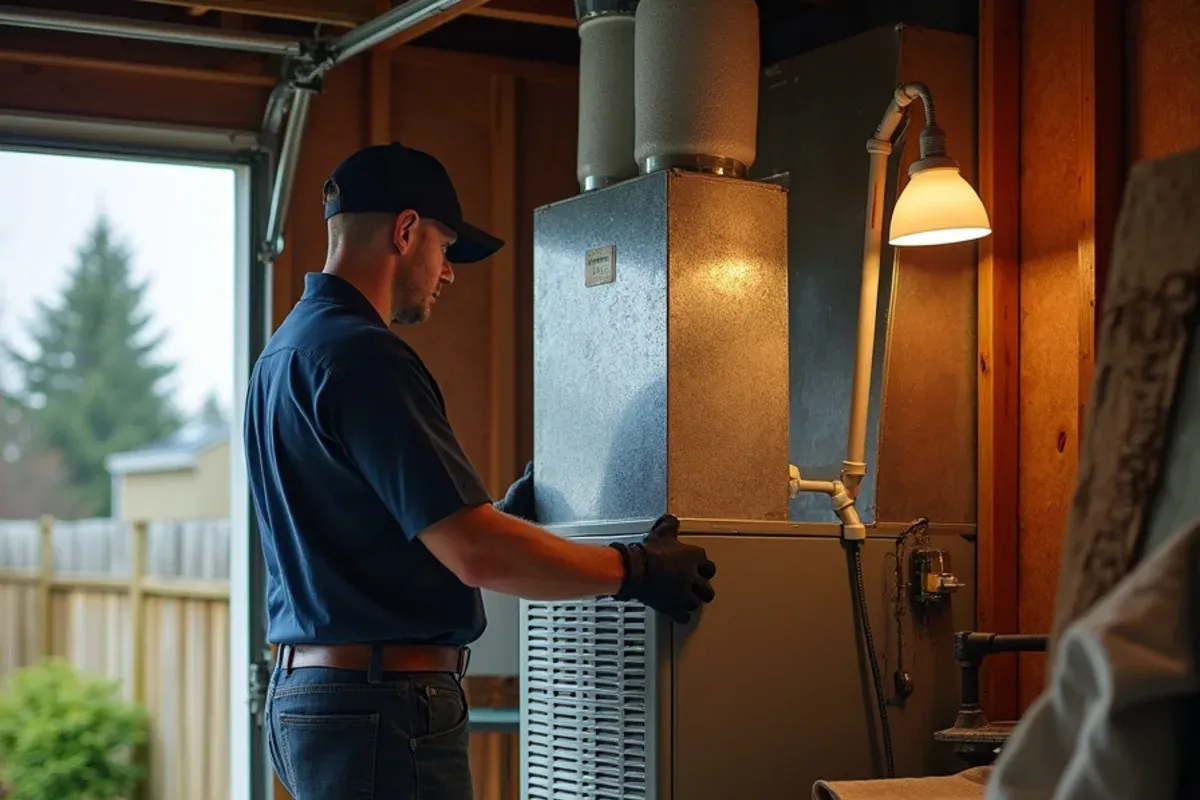
Cooling added to a furnace system has more parts than the outdoor box suggests. Each install we do covers:
Heat-gain sizing plus a blower test
A cooling load paired with a measured static pressure reading, so the tonnage fits both the house and what the existing blower can push.
Cased coil and drain safety
An evaporator coil fitted to the furnace outlet, a trapped primary drain and a float switch that shuts cooling off before an overflow reaches the floor.
Condenser on a level pad
Set with airflow clearance, out from under the roof drip line and away from bedroom windows and dryer vents.
New line set and a measured charge
Sized to the condenser, brazed under nitrogen, evacuated to a logged micron reading and charged by superheat or subcooling for today’s A2L refrigerants.
Circuit and disconnect
A 240-volt circuit, a weatherproof disconnect within sight of the unit and a whip rated for the condenser.
Thermostat and filter setup
A cooling-capable thermostat, smart models included, with fan settings configured and a filter rating matched to the blower.
Commissioning and closeout
Temperature split, airflow and charge recorded, then model numbers, registration details and filter sizes handed over.
How we install air conditioning
Adding cooling to a furnace system takes more care than it looks:
- 1
Cooling load calculation
Manual J for summer heat gain, including west-facing glass and attic insulation, keeps the unit from being oversized and clammy.
- 2
Duct and furnace check
Cooling needs more airflow than heating. We measure static pressure and confirm your blower can deliver it.
- 3
Coil and condensate
The evaporator coil goes on the furnace with a trapped drain line, plus a secondary pan or float switch where required.
- 4
Condenser placement
Outdoors on a level pad with airflow clearance, away from bedroom windows and dryer vents.
- 5
Line set, vacuum and charge
Brazed with nitrogen, evacuated with a micron gauge and charged to measured superheat or subcooling.
- 6
Startup and filter upgrade
We verify temperature split and airflow, then talk through filtration for smoke season.
Cost factors for adding AC
Regional planning figures put central AC around $6,500–$10,500 installed. A standard heat pump often runs $9,500–$13,500 but replaces some heating cost too. Your price depends on:
- AC vs. heat pump
- A heat pump costs more up front but heats efficiently most of the year.
- Furnace compatibility
- An older furnace with a weak blower may need replacement to support cooling.
- Coil access
- Crawl space and attic furnaces make coil and drain work harder.
- Duct capacity
- Undersized returns are common and may need correction.
- Electrical
- A new 240-volt circuit and disconnect are usually required.
- Filtration upgrades
- A deeper media cabinet for MERV 13 filters adds modest cost.
These are regional ranges for planning, not our prices. Duct and electrical conditions vary a lot from house to house, so the final price requires a site visit.
Central AC or a heat pump? The Bremerton math
A straight air conditioner only works a few weeks a year here. A heat pump uses the same outdoor footprint, cools just as well in summer, and then carries most of your heating from October through April while the furnace becomes backup. For many households, that makes the heat pump installation option the better long-term value, and our comparison of heat pumps and gas furnaces in the Pacific Northwest explains why.
A straight AC still makes sense when the furnace is new and efficient, the budget is tight, or the panel can’t support backup heat. We price both so you can compare honestly.
Incentives can tip that math, but check before you count on them. A straight air conditioner is not what PSE’s heat pump paths target, while a heat pump chosen to do the cooling may open one, depending on what heats the house now and on current program rules. Verify eligibility and the qualifying model before signing, and if you finance either option, get the APR, term, fees and total repayment in writing so the two bids compare on real cost.
AC installation in Bremerton, WA for homes without ducts
Older houses heated by baseboards or wall heaters have no ducts to carry cool air. Ductless is usually the cleanest answer, and ductless mini-split heads heat as well as cool. Homes with an existing duct system but an undersized return can often be fixed during the install.
We see both situations across Silverdale, Tracyton and East Port Orchard. Upgrading to a MERV 13 filter in a proper media cabinet during the install makes a real difference on smoke days, as long as the blower has the static pressure headroom to handle it.
AC quote checklist: matched coil, condensate and sweating ducts
Adding cooling to a furnace looks like a small job on paper, which is why quotes for the same Kitsap Lake rambler or West Bremerton two-story can vary so much. Ask for three in writing and check each for these lines:
- Matched condenser and coil: both model numbers, the SEER2 rating for that combination and how the coil fits your furnace cabinet
- Blower test result: measured static pressure and whether the furnace can move cooling airflow or needs replacing
- Condensate: trapped drain route, secondary pan or float switch, and a condensate pump if the furnace sits in a crawl space
- Duct insulation: supply runs through a crawl space or attic that need insulating so they do not sweat in July (our notes on damp crawl spaces and ducts explain why)
- Line set and charge: a new line set sized for the condenser, with a written vacuum and charge record from an EPA 608-certified tech
- Electrical and permits: 240-volt circuit, disconnect, any L&I electrical permit and the Bremerton mechanical permit; the 2026 schedule lists $14.70 for a compressor up to 3 hp, a fee line rather than the job total
- Heat pump alternative: if quoted, its backup-heat plan and panel load, so the comparison is complete
Why Bremerton homeowners pick us for air conditioner installation
Cooling runs only a few weeks a year here, which makes it easy to oversize, underdrain or bolt onto a furnace that can’t support it. We plan against each of those.
Sized for Puget Sound summers
A unit picked from a national rule of thumb is usually too big for a house here, and short cycles leave rooms cool but clammy. We size from your heat gain and put the result in writing.
Furnace compatibility checked first
If the blower or cabinet can’t support a coil, you learn that before signing, along with what a matched furnace installation would add compared with keeping the one you have.
Refrigerant work by EPA 608-certified techs
Newer A2L refrigerants bring their own handling and leak-check steps. Every charge we set is measured, not estimated from a gauge glance.
Dated records for the next visit
Startup readings and photos of the coil, drain and disconnect stay on file, so a spring HVAC maintenance visit can compare against day one.
FAQ
AC Installation questions from Bremerton homeowners
Do I really need AC in Bremerton?
Many homes got by without it for decades, but summers have changed. The 2021 heat dome pushed temperatures past 100°F, and wildfire smoke now shows up most late summers. If upstairs rooms get hot, anyone in the house is heat-sensitive, or you want to keep windows shut on smoke days, cooling is worth serious consideration.
Can you add AC to my existing gas furnace?
Usually, yes. We add an evaporator coil on top of the furnace, a condenser outside and a refrigerant line set between them. The furnace blower has to move enough air for cooling, which we test first. If the furnace is old or undersized for the airflow, replacing both together can be the better investment.
Will air conditioning help with wildfire smoke?
Indirectly. AC lets you keep windows closed, and the system’s blower circulates air through your filter. Upgrading to a MERV 13 filter captures far more fine smoke particles than a basic filter. Pair that with sealed doors and windows, and indoor air stays noticeably cleaner during smoke events.
When is the best time to install AC?
Spring, well before the first heat wave. Once a hot week hits in late June or July, demand spikes and scheduling tightens. Installing in April or May gives time to handle any duct or electrical issues without rushing, and you’ll be ready when the first warm spell arrives.
How should I run my new AC on wildfire smoke days?
Keep windows and doors shut and set the thermostat fan to On rather than Auto, so air passes through the filter even when the compressor is idle. Check the filter after a smoky week; a MERV 13 filter loaded with ash restricts airflow and can let the coil freeze. If bath fans or a fresh-air intake run constantly, turn them down until the air clears outside. Keep a spare filter on hand from August on so a change never waits for a store run.
What size air conditioner does my Bremerton home need?
There’s no honest answer from square footage alone. Cooling size depends on window area and direction, attic insulation, air leakage and how many people live there, which is why we run a Manual J heat-gain calculation. Many Puget Sound homes need less capacity than a rule of thumb suggests, and a smaller unit runs longer cycles that pull more moisture out of the air.
How long does it take to add central air to a furnace?
Most installs on a furnace that’s ready for a coil take one full day: coil and drain in the morning, then condenser, line set and electrical, followed by vacuum, charge and testing. A crawl space or attic furnace, a new return duct or a panel that needs work can add a second day. Mechanical and electrical inspections are scheduled after the system is running.
Should I replace an old R-22 air conditioner or just recharge it?
Replace it once it needs refrigerant. R-22 production ended in 2020, so the remaining supply is expensive, and a leaking system usually leaks again. New systems use different refrigerants and need a matched indoor coil, so the condenser and coil get replaced together, and the old line set is reused only if it tests clean and fits. A small repair on an R-22 unit that still holds its charge can buy time.
Air conditioning installs where summer heat hits hardest
Heat builds differently across our area. Waterfront homes in Rocky Point catch afternoon glare off the water through big west windows, while houses set back from the shore around Erlands Point and Kitsap Lake miss the evening breeze and stay warm on still August nights.
Two-story homes in Poulsbo and Port Orchard often need cooling mostly for the upstairs bedrooms, where attic heat stacks up during a heat wave and a correctly sized system with good return air makes the biggest difference.
We provide air conditioner installation across Bremerton and nearby communities, including:
- AC Installation in Kitsap County
- AC Installation in Port Orchard
- AC Installation in Silverdale
- AC Installation in Chico
- AC Installation in Erlands Point-Kitsap Lake
- AC Installation in Navy Yard City
- AC Installation in Rocky Point
- AC Installation in Tracyton
- AC Installation in Enetai
- AC Installation in East Port Orchard