Short answer
Kitsap and other Western Washington crawlspace homes need duct cleaning when there is evidence inside the ducts: debris, rodent activity, remodel dust or growth after a moisture problem has been fixed. If the crawlspace is still damp, cleaning will not last. Seal the vapor barrier, reconnect and seal leaky ducts, replace moldy duct insulation, then clean.
When a Kitsap homeowner calls about a musty smell from the vents, the first request is usually duct cleaning. Sometimes that’s the right call. Just as often, the ducts are the messenger and the real problem is the crawlspace underneath them. Duct cleaning for mold in Washington homes only works if the moisture source is handled first.
Many homes around Erlands Point and Kitsap Lake sit close to water on damp soil, and the split-levels and ramblers across Port Orchard often run their ducts through crawlspaces that have never had a proper vapor barrier. Here’s how we sort out what actually needs doing.
How crawlspace moisture ends up in your ductwork
Ducts in a crawlspace live in whatever air is down there. Leaky return ducts pull that damp, earthy air straight into the system and spread it through the house. Leaky supply ducts push conditioned air out, which can depressurize the home and draw crawlspace air up through floor gaps.
Disconnected runs are more common than people think. A flex duct that has slipped off its collar dumps heated air into the crawlspace, leaves a room cold, and adds warmth and humidity underneath the floor where mold thrives.
Our wet season makes all of this worse. Bremerton sees roughly 45 inches of rain a year, and months of saturated soil release a steady stream of water vapor into any crawlspace without a sealed ground cover. If you have central AC or a heat pump, cool supply ducts running through that humid air in summer can sweat, and damp duct insulation becomes an easy place for mold to start.
Duct cleaning for mold in Washington homes: when it’s not the fix
Cleaning removes dust and debris. It doesn’t stop water, and it can’t restore materials that mold has grown into. Be skeptical of any duct cleaning pitch that ignores the crawlspace.
- If the crawlspace is still wet, contamination returns after cleaning
- Fiberglass duct board and flex duct insulation with mold growth should be replaced, not cleaned
- Visible mold on joists, subfloor or insulation is a remediation job for a mold specialist, not an HVAC contractor
- Sprayed-on sealants or biocides inside ducts are not a substitute for fixing the source
Fix the crawlspace first
Once the source is controlled, duct work actually lasts. The usual moisture fixes are straightforward:
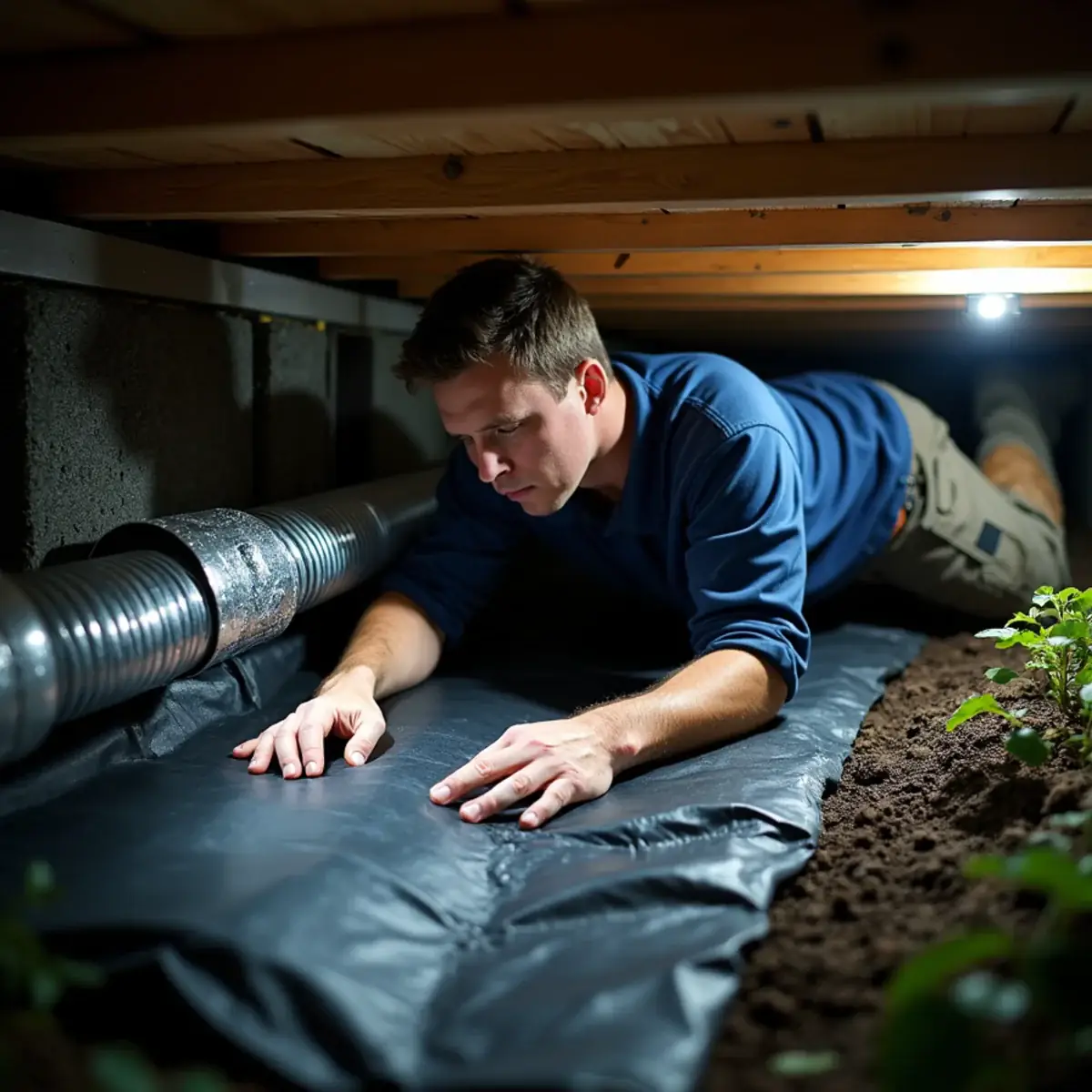
- A continuous ground vapor barrier, overlapped and sealed at seams and up the foundation walls
- Gutters and downspouts that carry roof water well away from the foundation
- Grading that slopes away from the house instead of toward it
- Replacing fallen or soaked floor insulation
- In some homes, a sealed and conditioned crawlspace with a dehumidifier
Duct sealing vs. duct cleaning
These solve different problems, and many crawlspace homes need sealing more than cleaning.
Duct sealing and repair
We reconnect loose runs, fasten them mechanically, seal joints with mastic and replace crushed or torn flex duct. Sealed, insulated ducts stop pulling crawlspace air, deliver heat to the rooms that need it and cut wasted energy. If the ductwork is past saving, replacement becomes part of a larger HVAC installation conversation.
When cleaning makes sense
Professional air duct cleaning is worth it after a remodel, after rodents have been in the ducts, when visible debris sits in the returns, or once a crawlspace moisture problem has been corrected and you want a fresh start. Done in that order, cleaning actually holds.
When crawlspace ductwork is too far gone to reseal, replacement should follow a Manual D duct design, not a copy of the old layout that caused the cold rooms. Regional planning allowances for ductwork run roughly $1,000 to $5,000, depending on how much is replaced and how hard the crawlspace is to work in. Treat that as a budgeting range only; the real number comes from a site visit. Our heat pump installation cost guide shows how duct work fits into a larger system budget.
What a typical inspection looks like
A common call from a lakeside home is a musty smell when the furnace starts in fall. We check the filter and blower compartment, look at return grilles, then go under the house with lights and a camera. We look for torn vapor barrier, standing water, disconnected runs and damp insulation, and we often measure how much air the system moves. You get a clear list: what’s an HVAC fix, what’s a crawlspace fix, and what needs a remediation specialist. Regular HVAC maintenance catches many of these problems early.
Photos and questions that speed up a crawlspace duct visit
If you can look under the house safely, a few phone photos help us plan before we arrive. Don’t crawl into standing water or past exposed wiring to get them.
- The vapor barrier near the access hatch, and any standing water
- Loose, sagging or crushed flex duct and wet insulation
- The furnace or air handler model plate and the current filter
- Any earlier duct cleaning or mold quotes, so we can compare what each one actually covers
From the field
From the field: readings that decide duct cleaning versus a moisture fix
Before anyone quotes cleaning, we take a humidity reading in the crawlspace and another inside the house. A crawlspace that sits far wetter than the living space, or a home that stays above roughly 60 percent relative humidity through the fall, tells us the ducts are downstream of the problem. A camera look inside the return plenum and one main trunk then shows whether there is real debris or just a thin, dry film.
Some of the worst moisture we find has nothing to do with the soil. Bath fans and dryer vents that were never extended outside often end in the crawlspace, pumping warm, wet air right onto the ducts. Fixing those terminations is cheap compared with replacing wet duct insulation twice.
We also push back on calendar-based cleaning. A tight, dry system in a home without pets or a recent remodel can go a long time without it, while a house that just had rodents under the floor needs attention now. Dark dust around a supply register is usually dust or candle soot rather than mold, and it deserves a look before anyone sprays anything.
When the crawl space itself is the recurring problem, some owners skip it entirely with ductless heat. Homes that run AC also sweat their supply ducts in July, which our guide on whether you need AC in Kitsap County touches on, and the same humidity checks apply across Kitsap County.
FAQ
Quick answers
Will duct cleaning get rid of a musty smell?
Only if the smell comes from debris inside the ducts. In crawlspace homes the odor usually comes from damp air leaking into return ducts or from wet insulation. Fixing the vapor barrier, reconnecting ducts and sealing leaks typically solves it. Cleaning is worth doing afterward, once the moisture source is under control.
Should I have my ducts sprayed with a mold treatment?
We don’t recommend it as a first step. Spraying biocides or sealants inside ducts doesn’t fix the moisture that caused the growth, and some products aren’t meant for air ducts at all. Control the source, replace contaminated porous materials, and bring in a mold remediation specialist if growth extends beyond the ductwork.
How can I tell if my ducts are disconnected?
Clues include one room that is always colder, weak airflow from a single register, a crawlspace that feels warm in winter, or higher bills without explanation. The only sure check is a visual inspection under the house. A technician can reconnect and seal loose runs, usually in a single visit.
Will a higher-rated air filter fix a musty smell from the vents?
Rarely. A filter catches particles, not the damp air a leaky return pulls in from the crawlspace, and a much tighter filter can choke airflow on some blowers. Seal the returns and control crawlspace moisture first, then choose a filter your system can breathe through. Ventilation and filtration should be reviewed together, not swapped for each other.
What should a duct repair or duct cleaning quote include?
A useful written quote separates duct sealing, reconnections and replacement from cleaning, and lists which runs are included. It should say whether insulation is replaced, how access is handled and what is excluded, such as vapor barrier work or mold remediation. Compare two or three quotes line by line and verify each contractor’s Washington L&I registration.
The bottom line
Ducts get blamed for a lot of crawlspace problems. Dry out the space under the house, seal and reconnect the ducts, and then decide whether cleaning is still needed. That order saves money and keeps the problem from coming back.
If your vents smell musty or a room never warms up, we can inspect the crawlspace and ductwork and give you a straight answer about what will actually help.
Sources & official references
- ACCA standards: Manual D residential duct design
- U.S. Department of Energy Energy Saver: ducts and air sealing
- Washington L&I: verify a contractor’s registration
Programs, rules and fees change. Confirm current details with the source before you act.