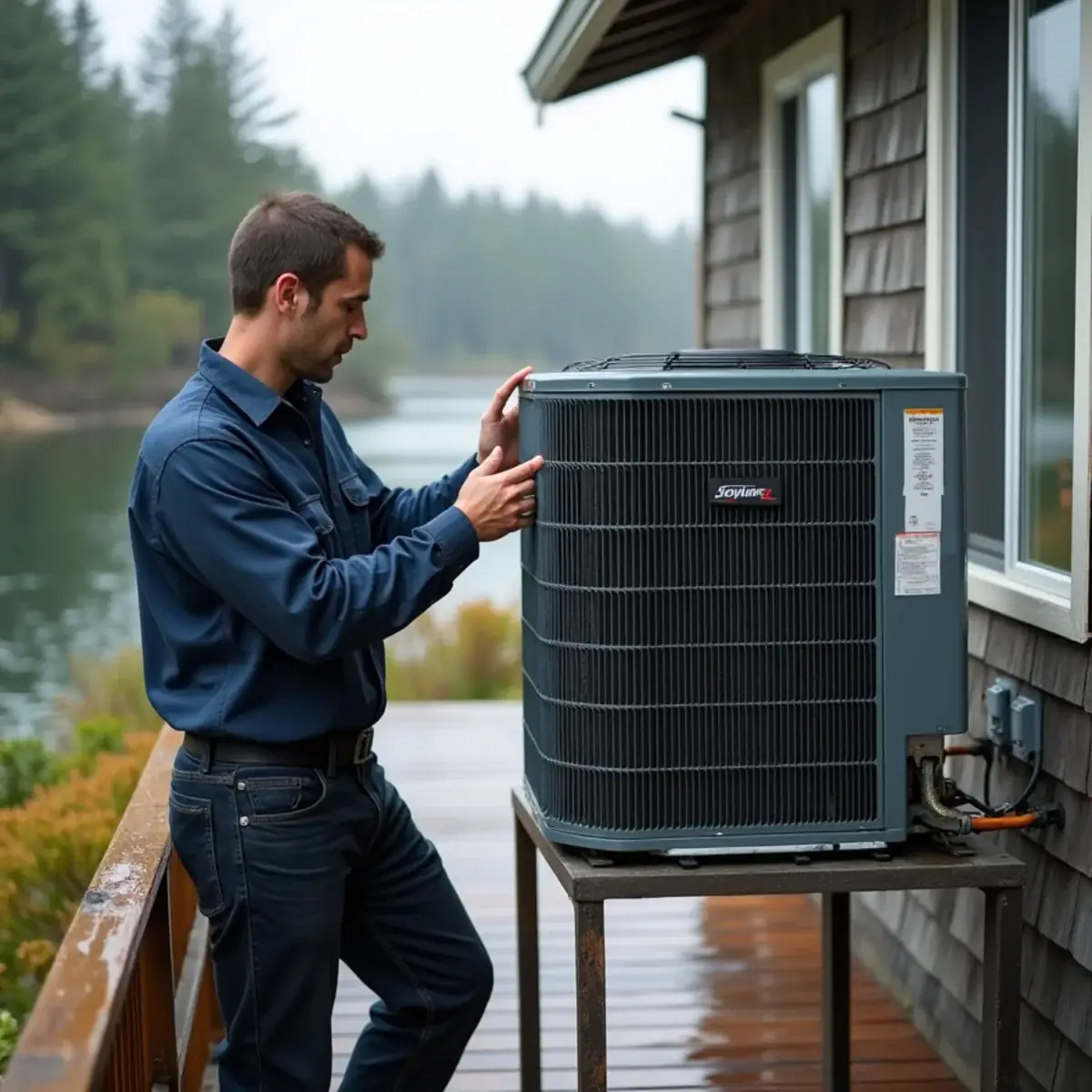
Rocky Point is a West Bremerton peninsula on Port Washington Narrows near Oyster Bay, and nearly every home here is on the water or close enough to smell it. We’re a short drive out Kitsap Way, typically five to ten minutes from central Bremerton, which makes us a practical HVAC contractor in Rocky Point, WA for the repeat visits coastal equipment needs.
That water is why Rocky Point needs a slightly different playbook. Salt-laden air is hard on outdoor coils, fasteners and electrical connections, and a unit that would last a long time inland can wear out noticeably faster a few yards from the shoreline.
Reviewed · travel, permit and utility details are rechecked at each update.
Salt Air, Shoreline Lots and Outdoor-Unit Wear
Homes on Rocky Point range from older waterfront houses to remodeled view homes, and many have added heat pumps over the last couple of decades. The common thread is exposure: outdoor units sit on decks, side yards or low pads where spray, wind and fog keep them coated in salty moisture much of the year.
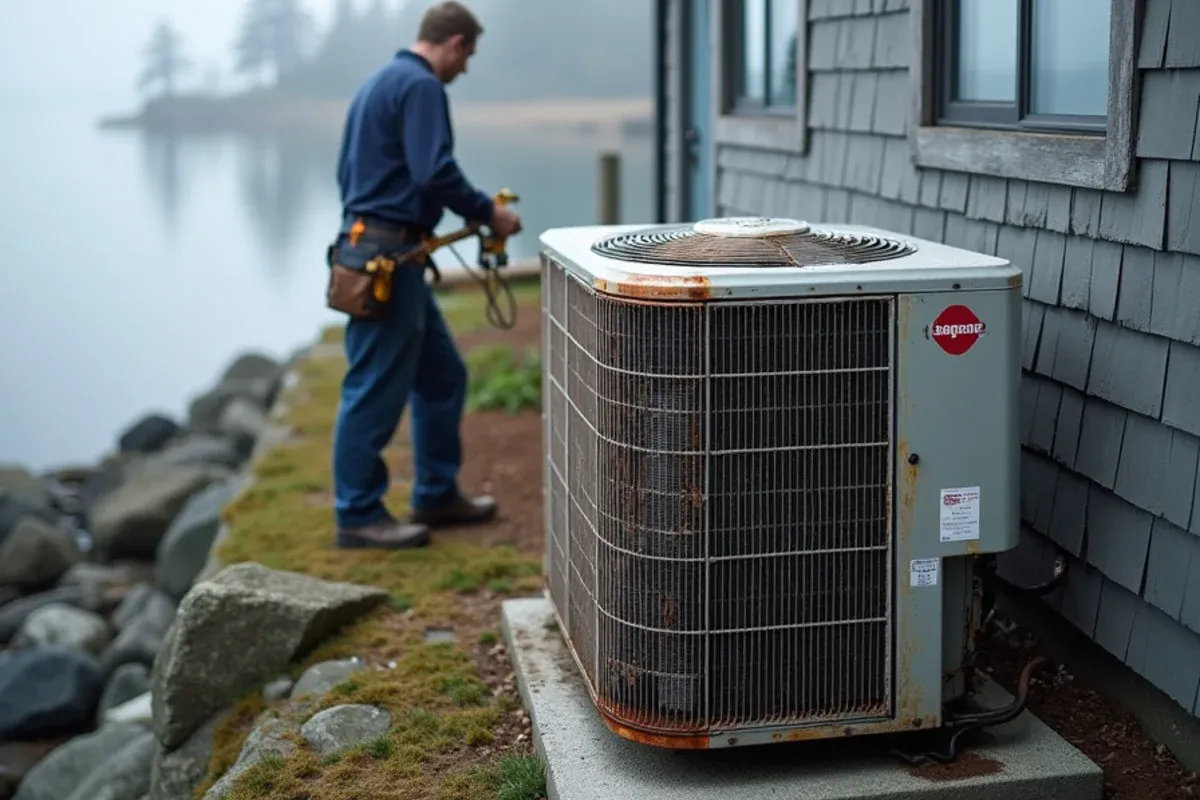
Salt speeds up corrosion on aluminum coil fins, steel cabinets and screw heads. The early signs are white powder on the fins, rust bleeding from panel seams and pitted electrical lugs. Left alone, that wear turns into refrigerant leaks and failed capacitors or contactors. Our guide to salt air and HVAC corrosion goes deeper.
- Coil protection: we favor coated or corrosion-resistant coils for any unit within sight of the water.
- Placement: where the lot allows, the landward side of the house cuts direct spray exposure.
- Freshwater rinses: a gentle hose rinse between service visits washes off salt film before it does damage.
A Typical Service Call Along Rocky Point Road and Marine Drive
A common Rocky Point call comes in late fall. A heat pump that cooled fine all summer now blows lukewarm air or locks out on the first cold morning. On arrival we usually find corroded coil fins, sometimes a pinhole refrigerant leak, and a contactor with pitted, salt-crusted contacts.
We leak-check, test the capacitor and electrical connections, and tell you plainly whether the unit is worth another repair. If the outdoor unit is near the end, we look at a coastal-rated replacement and rethink where it sits.
Access matters here too. Narrow lots and waterfront setbacks off Rocky Point Road, Marine Drive and Oyster Bay Avenue mean we plan equipment moves and line set routes before install day, not during it.
Rocky Point at a glance
From our Bremerton base
About 5–10 minutes from central Bremerton via Kitsap Way
Neighborhoods & roads we cover
Rocky Point Road · Marine Drive · Oyster Bay Avenue · West Bremerton
Near
Port Washington Narrows · Oyster Bay · Dyes Inlet · Kitsap Way
ZIP codes
98312
HVAC services we provide in Rocky Point
Twice-yearly HVAC maintenance for waterfront homes is where coastal equipment lives or dies: coil cleaning, electrical checks and early corrosion spotting before a leak starts.
When salt finally gets to a coil or contactor, our heat pump repair techs find the real failure and tell you whether the unit has more seasons left.
A replacement heat pump installation on the waterfront should include a coastal-rated outdoor unit, sensible placement and corrosion-resistant mounting hardware.
Older shoreline houses without ducts often do best with a ductless mini-split, its outdoor unit tucked on the side of the house away from direct spray.
What Rocky Point waterfront owners should expect from our visits
Salt changes the job. Here’s how routine work shifts for homes on the Narrows and around Oyster Bay.
Corrosion recorded, not guessed
Each visit logs coil, cabinet and lug condition with dated photos, so you can see how fast salt is working on your unit across seasons.
Electrical checks weighted toward contacts
Salt film pits contactors and loosens connections before it kills a coil. We test capacitors and inspect contacts every time, which catches the failures behind most late-fall lockouts here.
Placement reopened at replacement
The old spot is not assumed to be the right spot. If the landward side or a raised stand cuts spray, we price it next to a like-for-like swap.
Leak repair only when the numbers work
A pinhole in a corroded coil is often the first of several. We recover refrigerant under EPA Section 608 rules, price the heat pump repair in writing and say when it stops making sense, the same advice shoreline owners in Enetai and Manchester hear.
Coastal spec sheet: what to require in writing for a Rocky Point replacement
Coastal-rated means little unless the quote says exactly what you are getting. For a house on Port Washington Narrows or Oyster Bay, ask each contractor to spell out these items so bids for a waterfront heat pump installation can be compared fairly.
- Coil protection: whether the coil coating is factory-applied or added in the field, and on which coils.
- Mounting: stand, bracket and fastener material, since plain steel screws are often the first thing to rust.
- Electrical: an outdoor-rated disconnect and whip, with connections sealed against salt film.
- Placement: the proposed location on the lot and why, including distance from direct spray.
- Warranty terms: any manufacturer conditions or exclusions for seacoast installations, in writing.
- Maintenance: the cleaning schedule the warranty assumes, so you can keep up with it.
FAQ
HVAC questions from Rocky Point homeowners
How much faster does salt air wear out a heat pump on Rocky Point?
There’s no single number, because exposure varies a lot from lot to lot. A unit facing the water on an open deck takes far more salt than one sheltered on the landward side of the house. What we see consistently is earlier coil corrosion and electrical wear than on similar equipment inland, which is why placement, coil coatings and regular cleaning matter more here.
Can I rinse my outdoor unit myself?
Yes, and it helps. Turn the unit off at its outdoor disconnect, then use a garden hose on a gentle spray to rinse the coil from top to bottom. Never use a pressure washer, which flattens the fins. Rinse every month or two during dry stretches and after windstorms that drive spray onshore, and leave deeper cleaning and electrical checks to a technician.
Should a waterfront home get a ducted heat pump or a mini-split?
It depends on the house. If you have sound ductwork in a dry crawl space, a ducted heat pump keeps things simple. Many older shoreline homes have no ducts or damp crawl spaces, and a ductless system avoids both problems. Either way the outdoor unit faces the same salt exposure, so equipment choice and placement matter as much as system type.
How much does a coastal heat pump replacement cost on Rocky Point?
Start with the regional planning ranges: about $9,500 to $13,500 for a standard heat pump and $12,500 to $16,500 for a cold-climate model around Puget Sound. Coil coatings, a corrosion-resistant stand and a longer line set to a sheltered spot add to that. These are market ranges, not our prices, and a waterfront site visit sets the real number.
Who issues the permit for replacing a heat pump on Rocky Point?
Rocky Point homes often carry a Bremerton mailing address, but jurisdiction depends on the parcel. Addresses outside Bremerton city limits are permitted through the Kitsap County Department of Community Development, and those inside go through the city. Electrical work for a new circuit usually needs its own permit. We confirm the right office for your parcel before quoting.
What does a spring and fall service visit cover for a Rocky Point heat pump?
The fall visit readies the unit for heating: coil cleaning, a defrost test, capacitor and contactor checks, and a look at fasteners and the disconnect for salt damage. The spring visit repeats the cleaning and electrical checks, confirms cooling performance and clears the condensate path. On Rocky Point, splitting maintenance this way catches corrosion months earlier than a single annual visit.
Nearby areas we serve
Call your Rocky Point HVAC contractor
HVAC Contractor in Bremerton, WA
Serving Bremerton, WA & Kitsap County