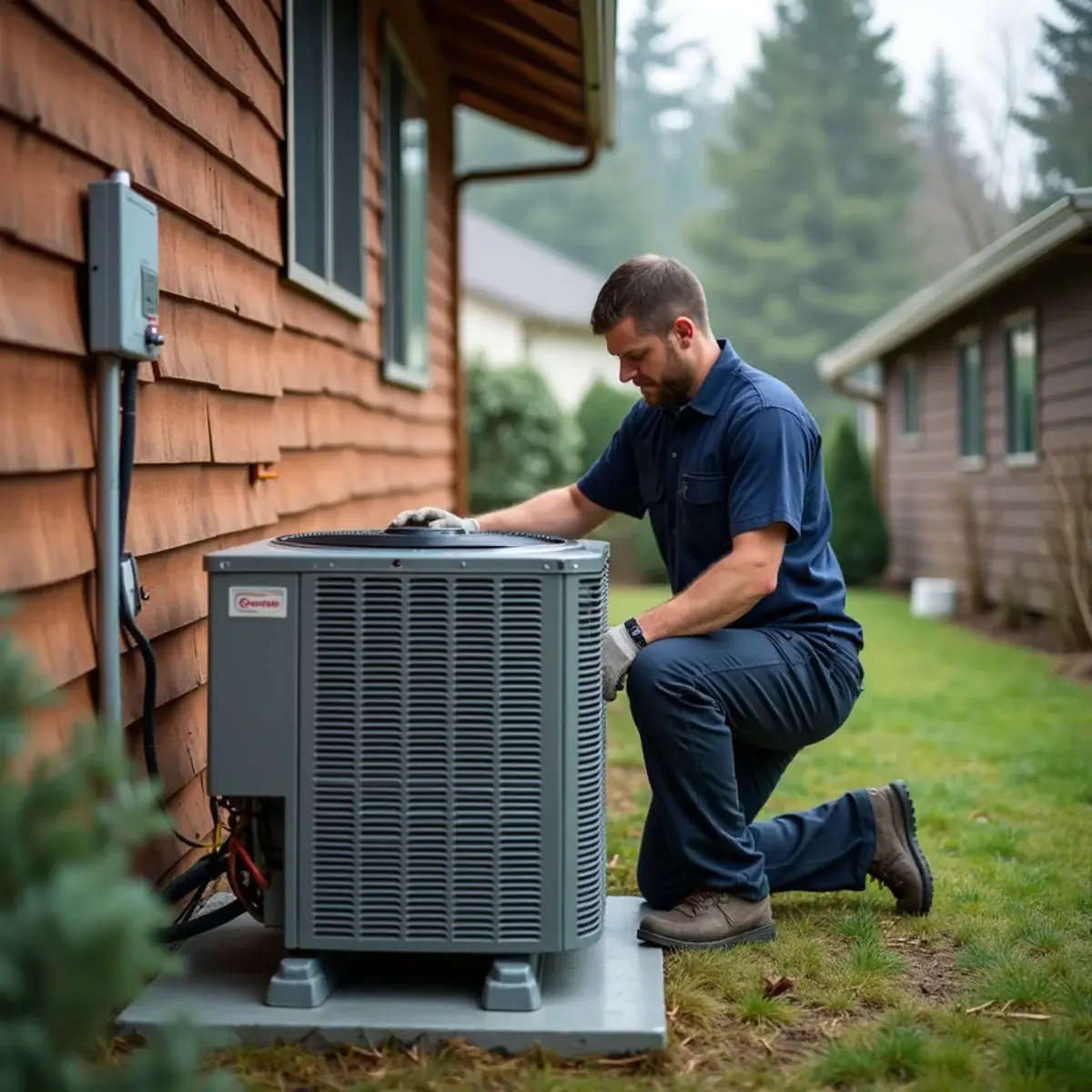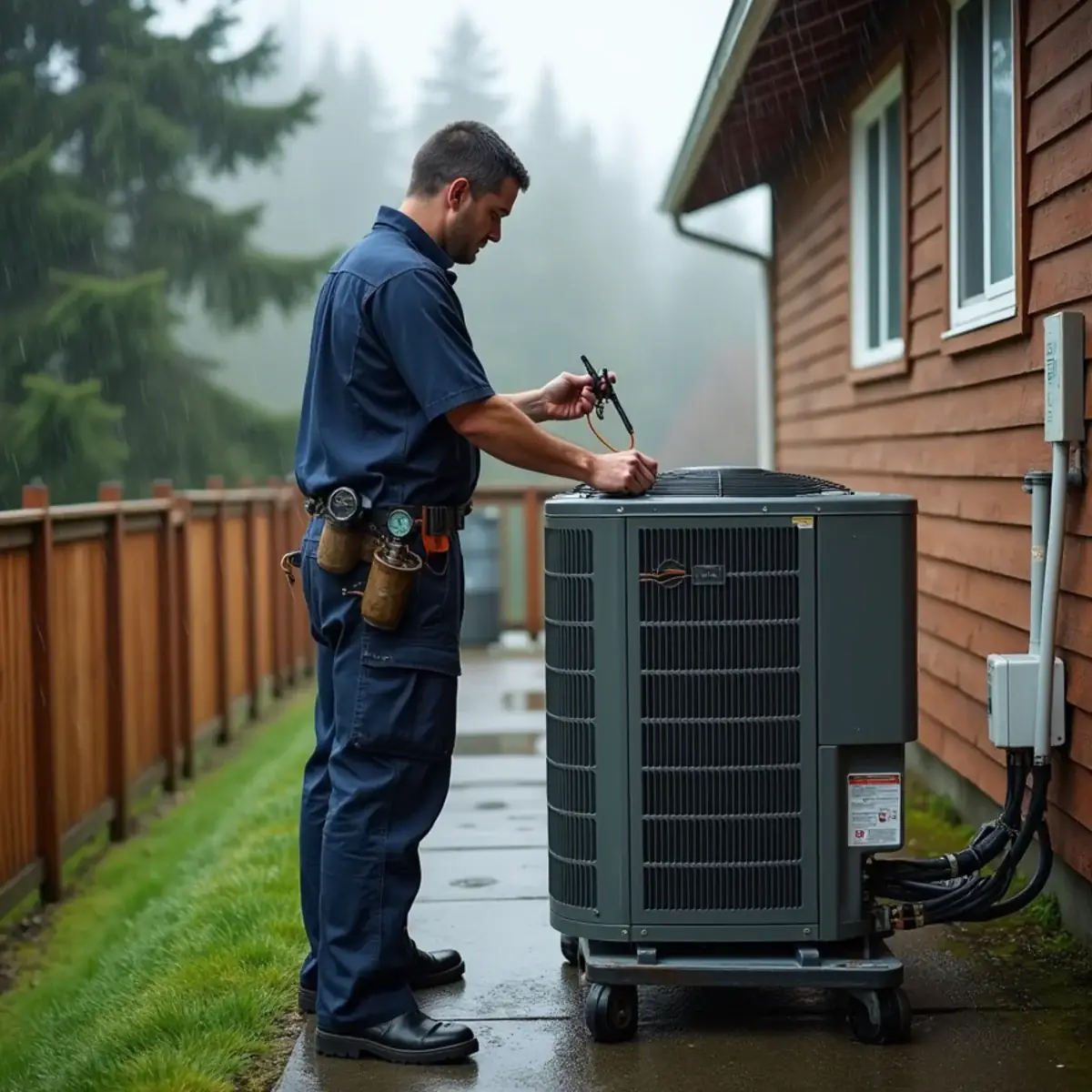
A heat pump is the most efficient way to heat most homes around Sinclair Inlet, but only when it’s sized and set up for our climate. Our heat pump installation in Bremerton, WA starts with a load calculation and a close look at your ducts, panel and outdoor space, because those three things decide how well the system performs in January.
Kitsap winters are unusual. We rarely see deep cold, yet the air sits near freezing and near saturation for weeks. That combination builds frost on outdoor coils quickly, so defrost control, drainage and backup heat need more thought here than a sales brochure suggests.
We install fully ducted systems, dual-fuel pairings with an existing gas furnace, and mixed setups that combine a central unit with ductless mini-split heads for additions or bonus rooms. If you’re weighing the switch from gas, read our comparison of heat pumps vs. gas furnaces in the Pacific Northwest first.
Reviewed · regional price ranges and rebate details are rechecked at each update.
When a heat pump makes sense for your home
These are the situations where we most often recommend one:
Electric baseboard or an electric furnace
Swapping resistance heat for a heat pump typically cuts heating energy use sharply, and it’s the path most utility rebates target.
An aging AC and furnace pair
If the AC is failing anyway, a heat pump replaces it and carries most of the heating load, with the furnace as backup.
No cooling at all
One outdoor unit handles both seasons, which matters on heat-wave and wildfire-smoke days.
An existing heat pump near 15 years old
Older units on R-22 or worn compressors are expensive to keep alive. If yours is simply acting up, start with heat pump repair.
What every heat pump installation visit includes
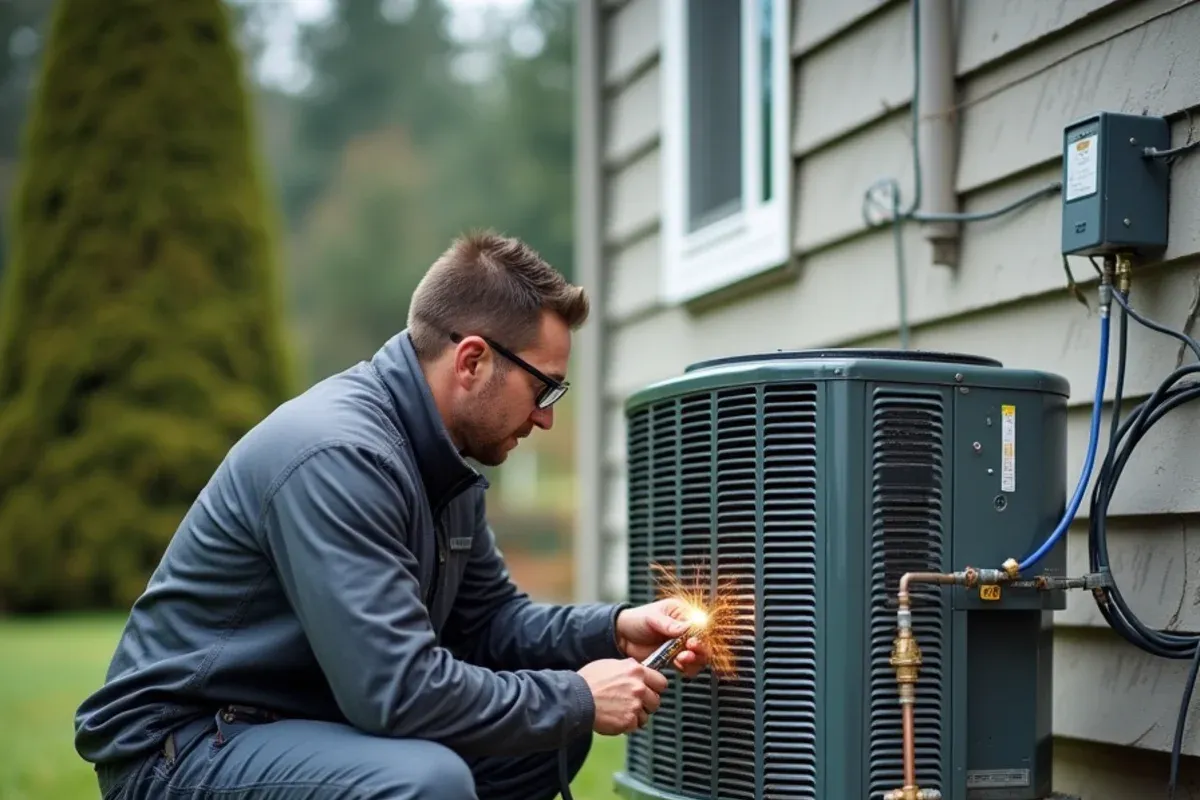
Beyond the equipment itself, these are the deliverables you should find on the startup sheet and the invoice when we finish a ducted or dual-fuel heat pump.
Raised pad or wall bracket
Mounted above splash and leaf line on anti-vibration pads, with a defrost-water path that stays off walkways and steps.
Pressure-tested line set
A nitrogen pressure test and a micron-gauge vacuum decay reading logged before any refrigerant is released into the system.
Matched indoor coil and trapped drain
Coil or air handler paired to the outdoor unit, a condensate trap and float switch, and a secondary pan wherever it sits over finished space or in an attic.
Backup heat wired and locked out
Heat strips sized to the panel load, or a dual-fuel control, with the lockout temperature and balance point written on the startup sheet.
Thermostat staging
A heat-pump-rated thermostat set up for auxiliary and emergency heat, so strips don’t fire every time someone nudges the setpoint.
Commissioning record and incentive paperwork
Superheat, subcooling, static pressure and supply temperatures recorded, plus the AHRI matched-system reference and serial numbers utility forms ask for.
Our heat pump installation process
Heat pumps reward careful setup more than almost any other equipment. Here’s how we do it:
- 1
Load calculation
A Manual J heat loss at a realistic design temperature for Bremerton, not a rule-of-thumb square-foot number.
- 2
Equipment selection
Manual S matching to pick a standard or cold-climate unit with the right capacity at 17°F and 47°F.
- 3
Duct and airflow check
Heat pumps need more airflow than many furnaces. We measure static pressure and correct undersized returns.
- 4
Outdoor placement
A stand or wall bracket above splash and leaf line, clear of roof drip, with a path for defrost water.
- 5
Line set and charge
Nitrogen-purged brazing, a deep vacuum and charge verified by measurement, handled by EPA 608-certified techs.
- 6
Controls and commissioning
Backup-heat lockouts, defrost settings and thermostat staging are set, tested and explained to you.
What drives the price of a heat pump install
Regional planning ranges put a standard heat pump around $9,500–$13,500 installed and a cold-climate model around $12,500–$16,500. Your job moves within or beyond those ranges based on:
- Standard vs. cold-climate
- Cold-climate inverter units cost more but hold capacity in freezing weather.
- Backup heat
- Heat strips or a dual-fuel setup typically add $300–$1,500 in the region.
- Panel capacity
- A 100-amp panel may need an upgrade before heat strips fit.
- Ductwork
- Undersized returns or leaky crawl space runs may need correction, and badly failed ducts can turn the job into a full HVAC system replacement.
- Removal and access
- Pulling baseboards, oil equipment or an old unit from a tight crawl space adds labor.
Ranges are regional estimates, not our pricing. Rebates can reduce your cost, but the final price requires a site visit. Our heat pump installation cost guide for Bremerton explains the math in more detail.
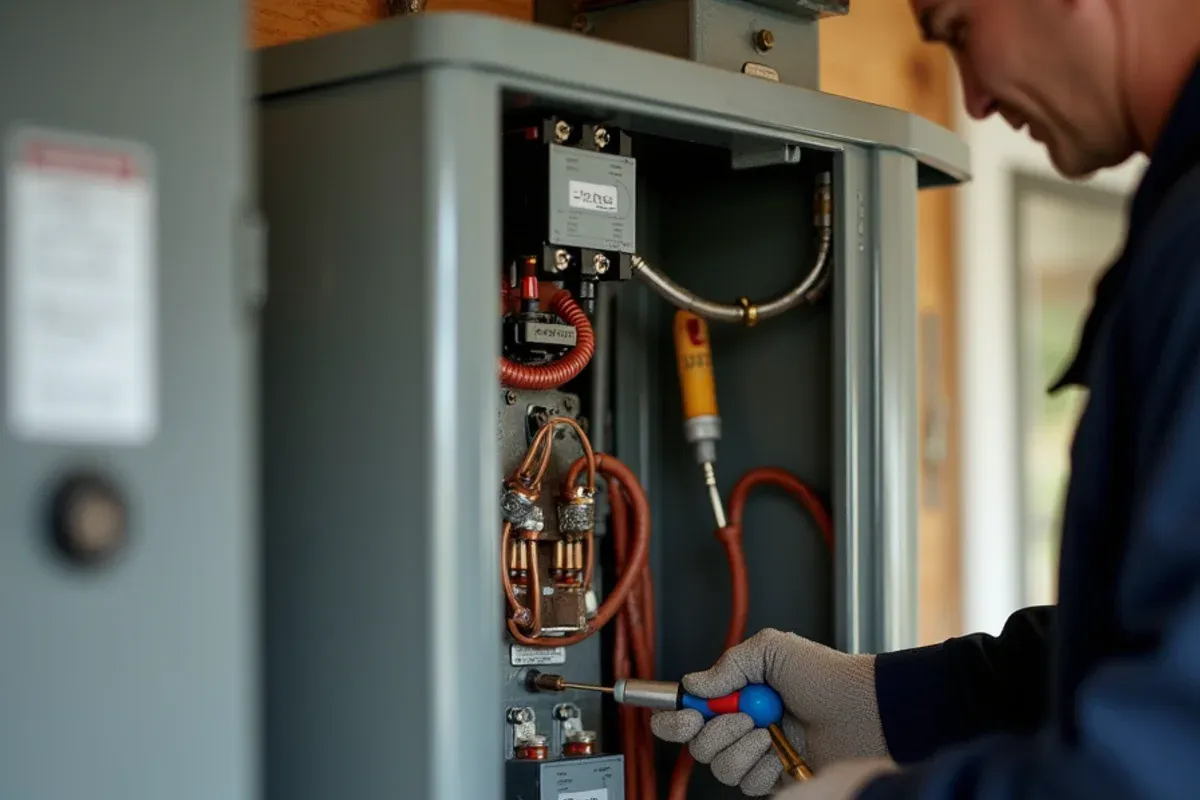
Standard vs. cold-climate heat pump for a Kitsap home
A standard single-stage heat pump handles most of a Bremerton winter fine, but its output drops as temperatures fall, right when the house needs the most heat. A cold-climate inverter model keeps much more of its capacity into the teens, so backup heat runs less during an Arctic outbreak.
For homes near the water in Manette or on the east side, a well-sized standard unit with good backup can be enough. Homes up the hill toward Erlands Point and Kitsap Lake, or farther north in Silverdale, see colder nights, and the cold-climate premium usually earns its keep there.
Backup heat, defrost and your electrical panel
Every heat pump defrosts in damp weather, briefly running in reverse to melt ice off the outdoor coil. Without backup heat, you’ll feel cool air during those minutes. Electric heat strips or a gas furnace in a dual-fuel setup covers it.
Heat strips draw serious current. A 10 kW strip alone can challenge an older 100-amp panel, which is common in postwar Bremerton homes. We run a load calculation on the panel before recommending strip size, and set outdoor lockouts so strips only run when truly needed.
- Defrost water needs to drain away from walkways, or it freezes
- Staged backup keeps winter bills from spiking
- Dual fuel suits homes with good gas service and a newer furnace
Rebates and paperwork
PSE has offered incentives for moving from electric-resistance heat to a heat pump, and income-qualified programs exist for some gas-to-electric conversions. Programs change often, so confirm current eligibility on the PSE website before you plan around a number. Our roundup of Washington heat pump rebates for Kitsap homeowners lists what to check. We handle the model numbers and install paperwork most programs require. Owners in East Port Orchard and elsewhere in PSE territory follow the same process.
Sequence matters. Confirm the rebate path and the qualifying model list first, then pick equipment, then sign. Financing approval is a separate question: a lender saying yes tells you nothing about whether the proposed heat pump qualifies for an incentive.
If you finance, get the APR, term, any deferred-interest clause, fees, deposit and total repayment in writing. Ask who submits the rebate documents and which deadline applies, and make sure the quote shows the installed price and the expected incentive as two separate numbers, so a rebate that falls through does not change what you owe.
Heat pump quote checklist for Kitsap winters
Two quotes can list the same tonnage and perform very differently at 30°F on a foggy Illahee morning. These lines show which one was designed for our weather:
- Capacity at 17°F and 47°F from the manufacturer’s data, checked against your Manual J design load rather than nominal tons
- Backup heat plan: strip size in kW or the dual-fuel switchover point, plus the outdoor lockout temperature
- Panel load result in writing, with any upgrade priced as its own line
- Manual D findings: measured static pressure and any return-air changes needed for heat pump airflow
- Line set: new or reused, and the reason for that choice
- Defrost and condensate: where melt water drains outdoors and where the indoor coil drain runs in a crawl space or attic
- Shoreline exposure: for homes near Sinclair Inlet or Dyes Inlet, how placement and coil care handle salt air around outdoor units
- Qualifying-model status for the current PSE program, confirmed before you sign
Why homeowners trust us with a heat pump installation
A heat pump runs nearly every day of the year here, so small setup choices show up on every bill. These are the ones we don’t leave to chance.
An honest fit, even when it isn’t a heat pump
If the ducts, panel or budget point toward dual fuel, a ductless layout or simply repairing what you have, that’s what we recommend. Diagnosis comes before any sales conversation.
Refrigerant work by EPA 608-certified techs
Brazing under nitrogen, a vacuum held and logged, and charge set by measurement. Those readings stay in your file, which helps if a coil ever needs a warranty claim.
Setup chosen for fog, not dry cold
Defrost drainage, mounting height and backup lockouts are picked for weeks of near-freezing, saturated air. Our guide to keeping a heat pump clear of moss and needles covers the owner’s side.
Records that keep rebates moving
Dated photos, model and serial numbers and the matched-system reference are filed together, so incentive paperwork doesn’t stall over one missing detail. After a windstorm, our notes on restarting a heat pump after a power outage help too.
FAQ
Heat Pump Installation questions from Bremerton homeowners
Will a heat pump keep my Bremerton house warm when it drops into the teens?
Yes, if it’s sized correctly and has appropriate backup. A cold-climate model keeps most of its capacity into the teens, and heat strips or a gas furnace cover the rest during rare Arctic snaps. Most of our winter hours sit between 35 and 50 degrees, where heat pumps are at their most efficient.
Can I keep my gas furnace and add a heat pump?
Often, yes. A dual-fuel system uses the heat pump for most of the season and switches to the furnace below a set outdoor temperature or during defrost. It works best when the furnace is in good shape and the ducts can handle heat pump airflow. We check both before recommending it.
Why does my outdoor unit steam or go quiet in winter?
That’s defrost. In damp near-freezing weather, frost builds on the outdoor coil, and the unit periodically reverses to melt it off. You may see steam and hear a whoosh, and the fan stops briefly. It should finish within several minutes. Frequent or failed defrost is worth a service call.
Do I need a new electrical panel for a heat pump?
Not always. Many homes have enough capacity for the heat pump itself, and the question is backup heat strips. We calculate the panel load during the estimate. If it’s tight, options include smaller strips, dual fuel with gas, or a panel upgrade, and we explain the trade-offs of each.
Does a heat pump installation need a permit in Bremerton?
Plan on it. Bremerton’s 2026 fee schedule lists $14.70 for a compressor up to 3 horsepower and $13.70 for heating or cooling alterations, but those are single line items, not the total for your project. A new circuit, heat strips or a panel upgrade usually brings a separate electrical permit through Washington L&I. Ask each contractor which permits their quote includes and who schedules the inspections.
How long does a heat pump installation take?
A ducted heat pump replacing an existing system usually takes one to two days on site. A panel upgrade, new return ducts or a dual-fuel tie-in to the furnace can add a day or more, and inspections follow the work. Scheduling in spring or early fall helps, because a day without heat is easy to live with then, and the system gets commissioned before the first damp, near-freezing stretch tests its defrost.
What should I look for when choosing a heat pump installer?
Ask how they sized the system and ask to see the load calculation. Check the contractor’s registration on the Washington L&I site, confirm refrigerant work is done by EPA 608-certified technicians, and compare written quotes line by line for backup heat, panel work and condensate routing. Be wary of a price given over the phone from square footage alone, since that shortcut is how oversized, short-cycling heat pumps get installed.
How much can a heat pump lower my heating bill in Bremerton?
It depends on what it replaces. Moving off baseboards or an electric furnace brings the biggest drop, because a heat pump delivers several units of heat for each unit of electricity in our mild 35-to-50-degree weather. Replacing a newer gas furnace saves less, and sometimes little, depending on gas and electric rates. We compare your current fuel use with the proposed system instead of promising a percentage.
Heat pump installs across the Kitsap Peninsula and Gig Harbor
Heat pump conditions change within a short drive. On Bainbridge Island and around Kingston, plenty of homes still heat with baseboards or an electric furnace, the exact switch PSE’s electric-side rebate paths have aimed at. Rural lots along the Hood Canal shoreline in Seabeck often lack gas at the road, so a cold-climate model with electric backup, placed out of the wind, is the usual answer.
South of Sinclair Inlet, many homes in Port Orchard and Gig Harbor already have a gas furnace in decent shape, which makes a dual-fuel pairing worth pricing: the heat pump carries the mild months and the furnace takes a hard freeze.
We provide heat pump installation across Bremerton and nearby communities, including:
- Heat Pump Installation in Kitsap County
- Heat Pump Installation in Port Orchard
- Heat Pump Installation in Silverdale
- Heat Pump Installation in Chico
- Heat Pump Installation in Erlands Point-Kitsap Lake
- Heat Pump Installation in Navy Yard City
- Heat Pump Installation in Rocky Point
- Heat Pump Installation in Tracyton
- Heat Pump Installation in Enetai
- Heat Pump Installation in East Port Orchard