Short answer
Heat pump maintenance in Western Washington comes down to keeping debris and water away from the outdoor coil: clear needles, leaves and moss monthly in fall, rinse the coil gently with a garden hose, keep the sides clear, fix gutter drips above the unit, raise it on a stand and book one professional check a year.
Heat pumps handle our climate well. What they don’t love is what our climate drops on them: fir needles, maple leaves, moss, a steady drip from an overflowing gutter and the occasional wet snow. Good heat pump maintenance in Western Washington is mostly about keeping that debris and water out of the way so the coil can do its job.
We see the same patterns on wooded lots in Artondale and along the creek-side streets of Chico. Here’s what to check yourself and what’s worth leaving to a tech.
Clearances: give the coil room to breathe
An outdoor unit pulls air through its coil sides and blows it out the top. Block either and efficiency drops, run times climb and defrost gets harder. The install manual lists exact clearances, but a good rule is at least a foot or two around the coil sides and several feet of open air above the fan.
- Trim rhododendrons, salal and ferns back from the cabinet
- Don’t stack firewood, garbage cans or kayaks against the unit
- Avoid tight lattice screens or decks built over the top
- Keep the unit out from under a low eave that dumps roof water on it
Heat pump maintenance for Western Washington debris
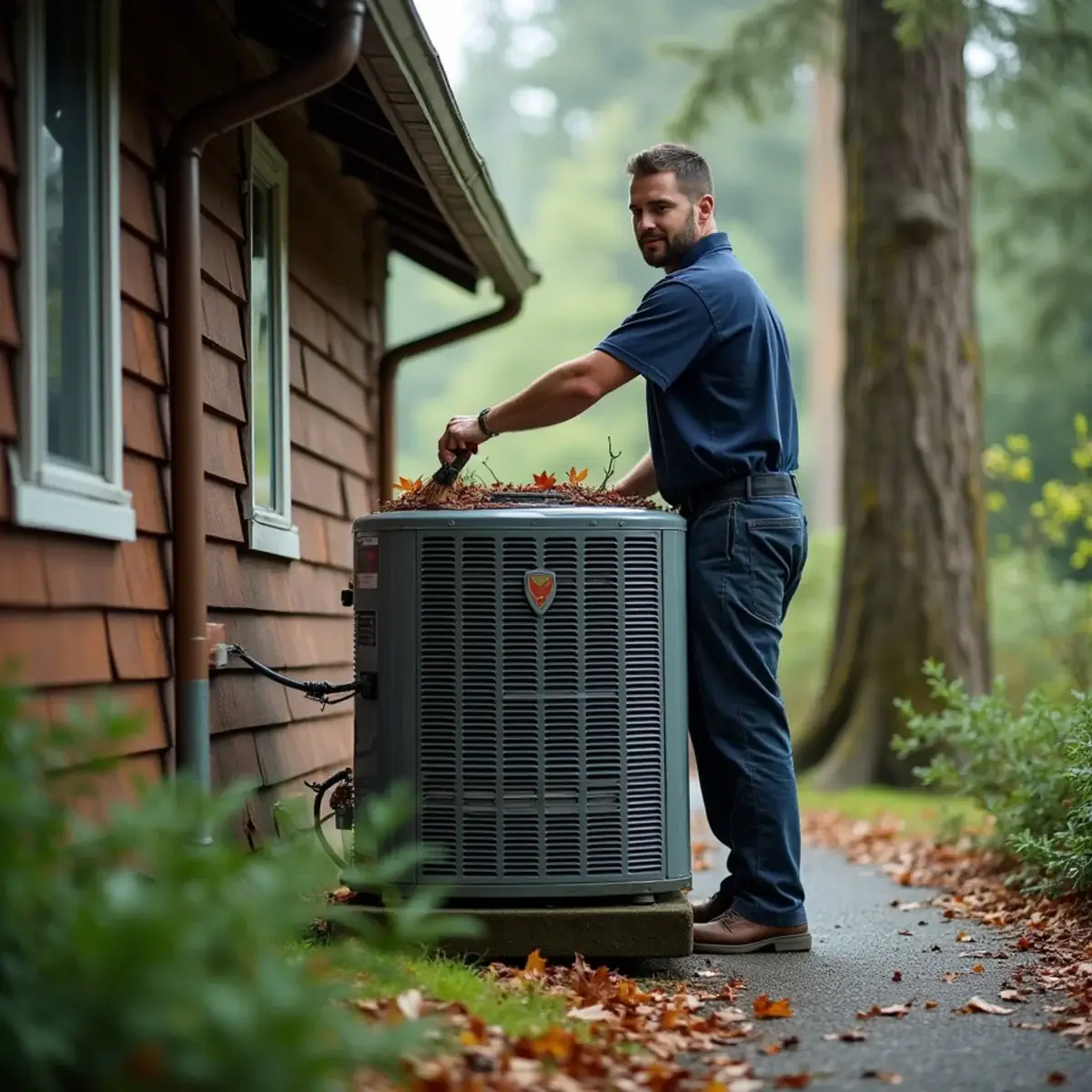
Needles and leaves collect on the top grille and get pulled into the fins. Moss grows on the cabinet, the pad and sometimes the coil guard, holding moisture against metal that would otherwise dry out between storms.
Gentle coil cleaning
Once or twice a year, and after heavy fall leaf drop, give the coil a light cleaning:
- Turn the system off at the thermostat and the outdoor disconnect
- Pick debris off the top grille by hand
- Use a soft brush on the fins, stroking with the fins, never across them
- Rinse from a garden hose on a gentle setting, no pressure washer
- Leave panel removal and chemical cleaning to a technician
Moss on the pad and cabinet
Scrape moss off the pad and cabinet top rather than spraying it with harsh moss killers near the coil. If the pad has sunk or tilted in soft ground, the unit may not drain properly during defrost. That’s worth fixing before winter.
Gutter drips, snow and ice
A gutter overflowing onto the unit is harmless in October and a problem in a January freeze. Water sheets over the top, freezes, and the fan blade can strike ice or the coil can encase. Clean the gutter above, add a diverter, or move the unit.
A raised stand, typically a foot or more off the ground, keeps the coil above wet snow and splash and gives defrost meltwater somewhere to go. We recommend one for most new installs in shaded, wet lots. After a snowfall, gently brush snow off the top and sides, and never chip ice off the coil with a tool.
Defrost is normal, a block of ice is not
On damp mornings near freezing, frost forms on the outdoor coil. Every so often the heat pump reverses briefly to melt it. The fan stops, you may hear a whoosh, and a cloud of steam rises off the unit. That’s the defrost board doing its job, and it usually lasts a few minutes.
What isn’t normal is a coil that stays solid white for hours, ice building up from the base, or a unit that runs constantly while the house cools. Those point to a failed defrost sensor, low refrigerant, a stuck reversing valve or poor drainage, and they call for heat pump repair before the damage spreads.
Electrical warning signs are different from ice. A burning smell at the outdoor unit, a scorched disconnect or a breaker that trips again after one reset means shut the system off at the thermostat and leave the breaker off. Don’t keep restarting it. Take a photo of the model plate and any thermostat code, then call for service so the tech arrives knowing what they’re looking at.
A simple seasonal routine
None of this takes long if you stay ahead of it:
- Monthly in fall: clear needles and leaves, check the gutter above
- Every 1–3 months: change or check the indoor filter
- Before winter: confirm the pad or stand is level and drains freely
- Once a year: book professional HVAC maintenance to check refrigerant performance, electrical parts and the defrost system
What a pro checks that you can’t see
A professional visit covers the parts of the system behind panels and inside the house. Refrigerant work requires EPA Section 608 certification, so charge checks belong with a tech, not a gauge set from the hardware store.
- Indoor coil and condensate drain, which clog with slime in our damp climate and can overflow into a ceiling or closet
- Electrical connections, capacitor and contactor, including corrosion on shoreline homes (see our salt air corrosion guide)
- Defrost board and sensor operation before the first freeze
- Airflow and whether heat strips are running more than they should
From the field
From the field: how needles turn into a frozen coil
On a wooded lot the damage usually starts where you can’t see it. Needles that slip past the top grille settle in the base pan, mat together with silt and plug the drain holes. Meltwater from each defrost cycle then has nowhere to go, refreezes overnight, and ice creeps up the bottom rows of the coil a little further every morning.
On a maintenance visit we compare outdoor coil temperature with the air around it, check amp draw on the compressor and fan motor, and read runtime history from the thermostat when it keeps one. A system leaning on its heat strips on a mild 40-degree day is telling us something, and a matted coil is usually the cause before anything expensive is.
The tradeoffs are honest ones. A coil coating slows corrosion, but it can peel if it goes on over dirt, so cleaning always comes first. Moving a unit out from under a drip line costs more than a diverter, yet at replacement time it is often the right call, which is why we plan placement as part of every heat pump installation.
- Check the base pan drain holes after big wind events, not only in fall
- Leave bent fins for the visit unless you have a fin comb and a light hand
- Notice defrost frequency; far more cycles than usual on similar mornings is worth a call
- If rooms cool off while the unit runs, start with our no-heat checklist before calling
FAQ
Quick answers
Why is my heat pump steaming on cold mornings?
That’s almost always a normal defrost cycle. Frost builds on the outdoor coil in damp, near-freezing weather, and the system briefly reverses to melt it, producing steam and a pause in the fan. It should last a few minutes. If the coil stays heavily iced for hours, call for service.
Can I use a moss killer near my outdoor unit?
Be cautious. Many moss treatments are corrosive to metal fins and coatings, and overspray can land on the coil. Scrape moss off the pad and cabinet by hand instead, and keep chemicals well away from the unit. If moss is growing on the coil guard, have a technician clean it during a maintenance visit.
Do I need a raised stand for my heat pump?
It helps on shaded, wet lots and anywhere wet snow piles up. A stand keeps the coil above slush and splash, lets defrost water drain away, and reduces ice buildup under the unit. For new installs in the area we usually recommend one, and existing units can often be raised during service.
When is the best time to schedule heat pump maintenance around Kitsap?
Early fall is the most useful slot, after leaf drop starts but before the first hard freeze tests the defrost system. A spring visit ahead of summer heat waves is a sensible second check for homes that rely on the heat pump for cooling. Booking before November also avoids the rush of no-heat calls.
Should I cover my heat pump in winter?
No. A heat pump runs all winter here, and a cover blocks the airflow it needs to heat and defrost. Even a loose tarp traps moisture against the cabinet and speeds corrosion. If roof water or falling needles are the problem, fix the gutter above or ask about a top-only shield that leaves the fan discharge open, set at the height the install manual allows.
The bottom line
Most heat pump problems we see on wooded Kitsap and Gig Harbor peninsula lots start as debris and water, not failed parts. Keep the coil clear, the gutter under control and the unit off the ground, and your system will spend its energy heating the house.
If your outdoor unit is buried in needles or icing up more than it should, we’re happy to come clean it properly and check that everything’s working as designed.
Sources & official references
- U.S. Department of Energy Energy Saver: heat pump systems
- EPA Section 608: refrigerant technician certification
- ENERGY STAR: heating and cooling guidance
Programs, rules and fees change. Confirm current details with the source before you act.