Short answer
With no heat in your Bremerton, WA home, confirm the thermostat is on Heat with fresh batteries, the furnace or heat pump breaker and service switch are on, and the filter isn’t clogged. Note any blinking status light. If you smell gas, leave and call from outside; a burning smell or repeat breaker trip means call a technician.
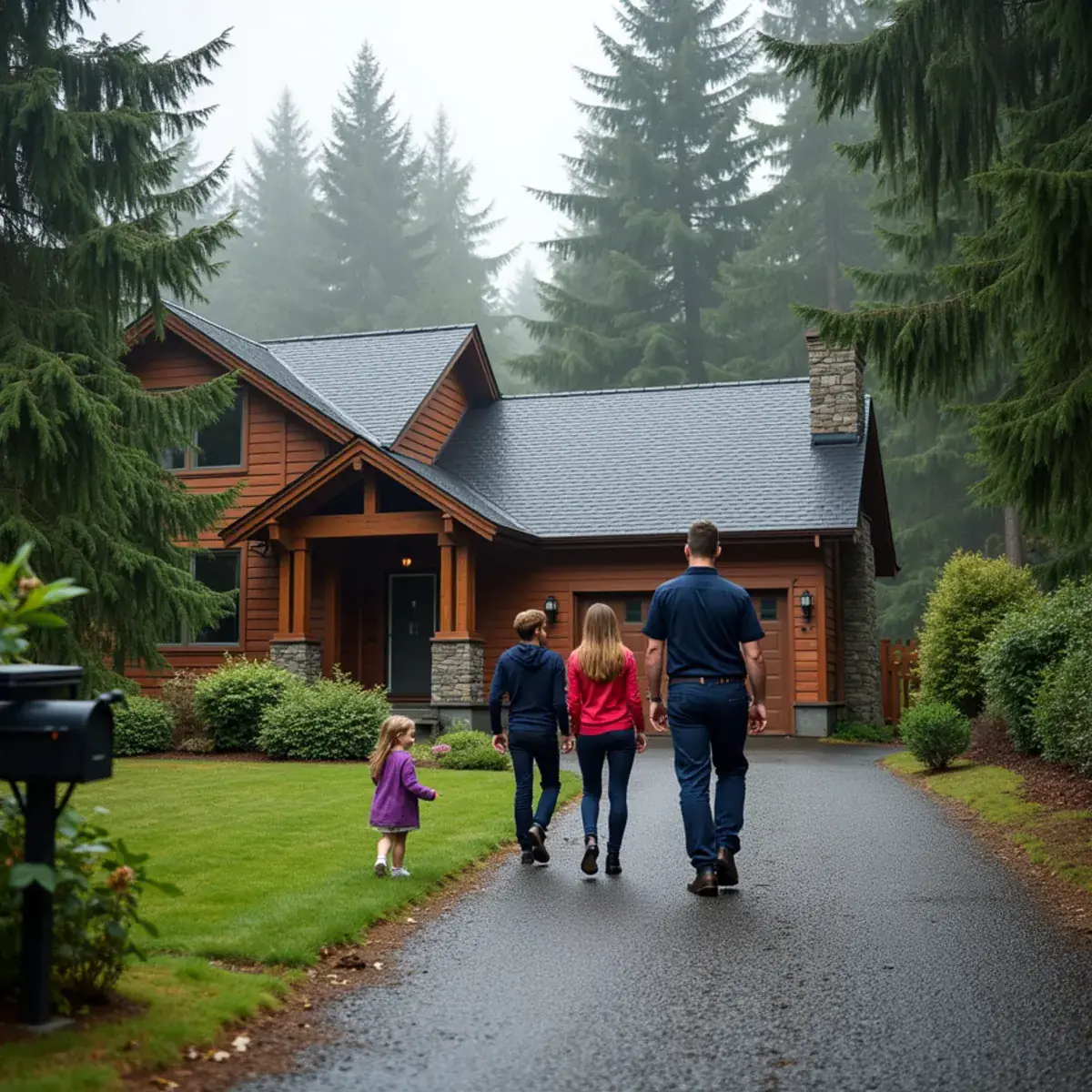
When there’s no heat in Bremerton, WA, the cause is sometimes a tripped breaker or a dead thermostat battery, and sometimes it’s a failed part that needs a technician. Ten minutes of safe checking usually tells you which one you’re dealing with.
This is the same checklist our techs walk people through on the phone before we send anyone out. It covers gas furnaces, heat pumps and electric furnaces, the three systems we see most across Kitsap County homes. If you finish it and the house is still cold, our no heat repair service picks up where this list leaves off.
Stop here first if any of these are true
Troubleshooting is for a quiet, cold system. It is not for a system that’s giving off warning signs. Skip everything below and act immediately if you notice:
- A gas or rotten-egg smell. Leave the house, then from outside call 911 or your gas utility’s emergency line (Cascade Natural Gas in most of Kitsap). Our guide to what to do when you smell gas near a furnace covers the details.
- A carbon monoxide alarm. Get everyone out, then call 911. Don’t reset the alarm and go back to bed.
- A hot electrical or burning-plastic smell, scorch marks, or a breaker that trips again the moment you reset it.
- Water pooling around the furnace or air handler near wiring or the control board.
Start at the thermostat
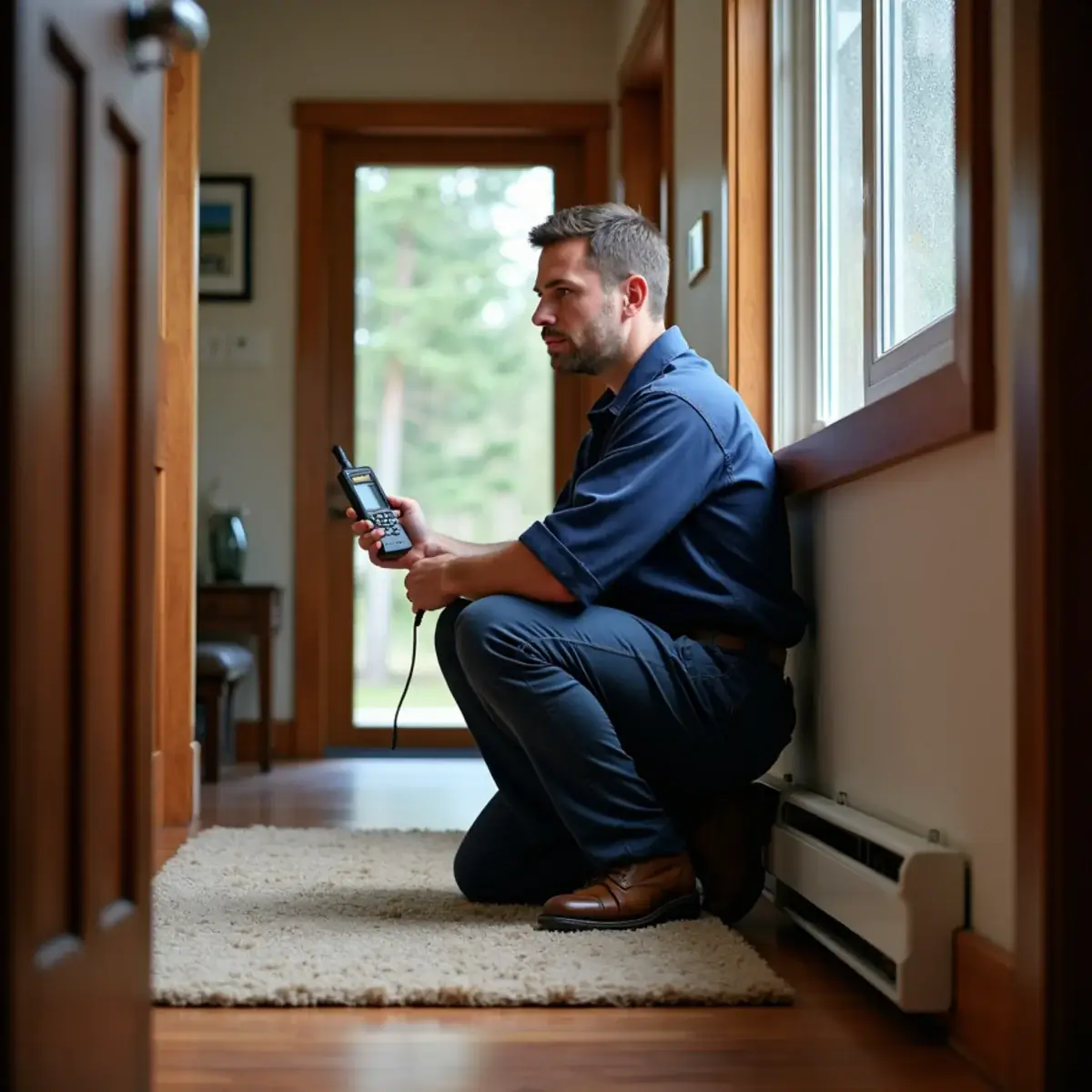
More no-heat calls end at the thermostat than anywhere else. Confirm it’s set to Heat (not Cool, Off or Auto with a strange schedule) and that the setpoint is at least three degrees above the room temperature. A blank or dim screen usually means dead batteries, so swap them even if the low-battery icon never showed.
Smart thermostats add their own wrinkles. A schedule, an eco mode or a lost Wi-Fi connection can hold the setpoint low. Many also show “waiting” or a countdown for up to five minutes after a change to protect the equipment. Give it that time before deciding nothing is happening.
Check the power, switches and filter
Every modern heating system needs electricity, including gas furnaces. After a windstorm or a flicker, one of these is often the culprit:
- The breaker. Look for a furnace, air handler or heat pump breaker sitting in the middle position. Heat pumps and electric furnaces use two-pole 240-volt breakers. Reset it once. If it trips again, leave it off and call.
- The service switch. Most furnaces have a switch that looks like a light switch on the wall or ceiling nearby, sometimes at the crawl space hatch or in the garage.
- The door panel. A safety switch shuts the furnace down if the blower door isn’t seated firmly. Push it closed and make sure the screws or latches are snug.
- The filter. A packed filter can overheat the furnace until the high-limit switch shuts the burners off. If it’s gray and matted, replace it and try again.
System-specific checks for no heat in Bremerton homes
Once power and the thermostat are ruled out, the next clues come from the equipment itself.
Gas furnaces
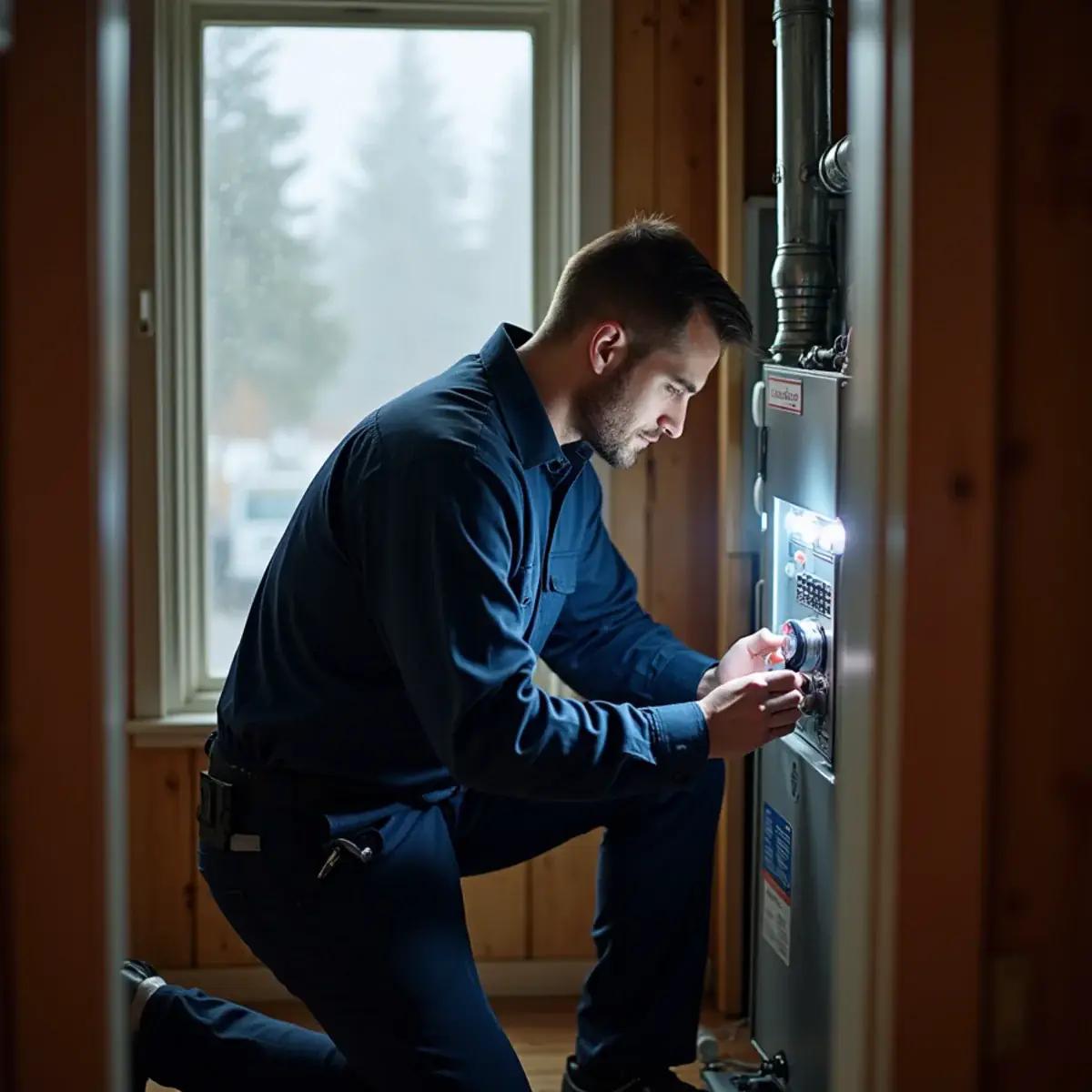
Look through the small window on the lower panel for a blinking status light. Count the flashes and match the pattern to the chart printed inside the door. That code tells a technician whether the problem is a pressure switch, a flame sensor, the igniter or a limit switch before they even arrive.
If you have a 90%-plus furnace with white PVC vent pipes, walk outside and check that the intake and exhaust aren’t blocked by leaves, blackberry vines or a wasp nest. Inside, a clogged condensate trap or a frozen drain line in a cold garage will keep the pressure switch open and stop the furnace from lighting.
Heat pumps
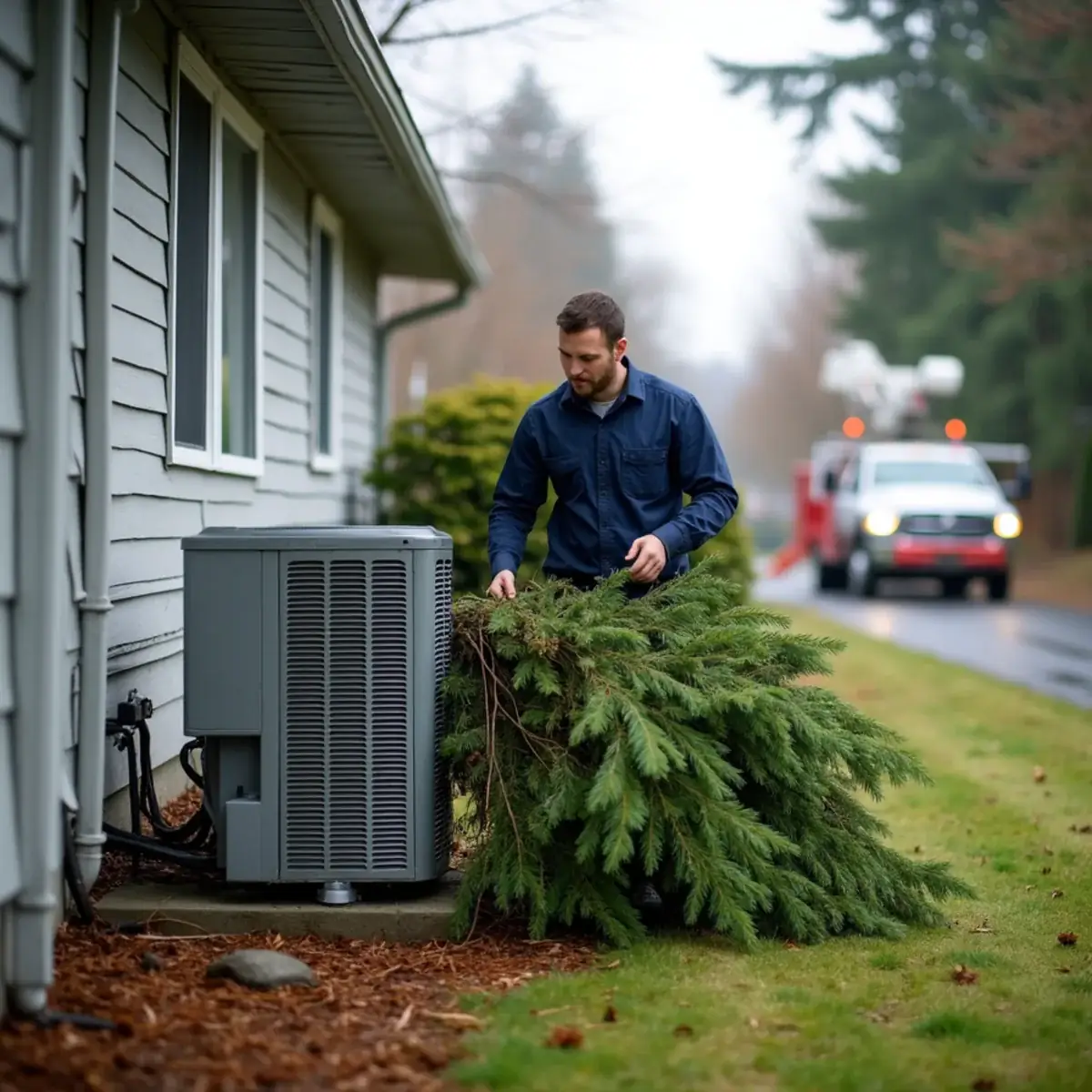
Check the outdoor unit. Some frost is normal, and a defrost cycle that sends up steam is normal too. A unit encased in solid ice, a fan that won’t spin, or fir needles packed against the coil is not. After an outage, heat pumps often need a warm-up period before they’ll run properly, which we explain in our post on restarting a heat pump after a power outage.
If the outdoor unit has clearly failed, switching the thermostat to Emergency Heat will run the backup heat strips and keep the house livable until a heat pump repair technician can diagnose it. It costs more to run, so treat it as a stopgap.
When to stop and call, and what to tell us
Stop troubleshooting when you’ve done the basics once and nothing changed, or when the fix would mean opening the burner compartment, touching wiring or resetting a safety switch a second time. Repeated resets hide the real problem and can make it worse.
A common call from Silverdale during a cold snap goes like this: a 90% furnace lights, runs a minute, shuts down and tries again, and the status light blinks three times. The cause is usually a condensate trap full of sludge or a drain line frozen where it runs through the garage. It’s a straightforward furnace repair, but it’s one that belongs to a technician with the right parts.
When you call, have the blink code, the age and model number from the furnace label, and a list of what you’ve already tried. That shortens the visit and often means the right part is already on the truck.
Before you pick up the phone, take a few quick photos: the furnace or air handler rating plate, the thermostat screen, the filter you pulled and any water or scorch marks you spotted. Pictures taken before cleanup show a technician how the system looked when it quit, and they help when a landlord or property manager has to approve the work.
On a night call, ask what the visit fee covers and what happens if the repair needs a part that isn’t on hand. A good technician diagnoses first and gives you written options to approve before any repair begins. If the answer is yes and the house is getting cold, our emergency HVAC repair line is the place to start. If you’d rather plan than scramble, a pre-winter HVAC maintenance visit checks the flame sensor, condensate drain and controls before the first cold snap.
From the field
What a technician measures once the no-heat checklist runs out
The homeowner checklist ends where the meter comes out. Our techs start at the thermostat wires, not the furnace. A voltmeter across the R and W terminals shows whether the 24-volt call for heat is reaching the equipment at all, and that one reading splits the problem in half: thermostat and wiring on one side, furnace or air handler on the other.
At the equipment, the control board’s fault history often says more than the live blink code, because it stores the last several lockouts in order. From there the checks follow the startup sequence: inducer amps, pressure switch vacuum on a manometer, igniter resistance, flame signal in microamps and gas pressure at the manifold. On a heat pump, it’s capacitor readings, contactor condition and refrigerant pressures once the compressor runs.
Two mistakes show up again and again before we arrive. One is a brand-new thermostat that was never the problem. The other is a thick high-MERV filter that looked like an upgrade but choked a blower designed for a thinner one.
- A flame sensor that fouls again weeks after cleaning usually points to a combustion air or venting issue, not a bad sensor.
- In older homes around Navy Yard City, brittle thermostat cable can short intermittently, so we test the wire run, not just the terminals.
- If the blower runs but the air is cool, the causes shift; our guide to a furnace blowing cold air covers that branch.
- When the failed part is a control board or inducer on a furnace near the end of its life, the repair or replace math is worth running before approving the fix.
FAQ
Quick answers
Why does my furnace start and then shut off after a few seconds?
That pattern usually points to a dirty flame sensor, a condensate or venting problem tripping the pressure switch, or a limit switch opening from poor airflow. Change the filter and check the vent pipes outside. If it keeps happening, note the blink code and call a technician rather than cycling the power repeatedly.
Is it safe to use space heaters while I wait for a repair?
Yes, if you use them carefully. Plug them directly into a wall outlet, never an extension cord or power strip, keep three feet of clearance from bedding and curtains, and turn them off when you leave the room or go to sleep. Never use a gas oven, grill or camp heater indoors for warmth.
Should I turn my water off if the heat is out overnight?
Usually not. Most Bremerton homes stay above freezing inside for a night or two, even without heat. During an Arctic outbreak with temperatures in the teens, open cabinet doors under sinks on exterior walls, let faucets drip slightly, and make sure crawl space vents are closed and any pipe insulation is intact.
Should I pay for an after-hours visit or wait until morning?
It depends on who is in the house and how cold it will get. Infants, older adults, tenants, anyone with a medical condition, or a forecast dropping into the teens make an after-hours visit worth it. If the house is holding a livable temperature and space heaters are running safely, a regular appointment may be fine. Either way, tell the dispatcher who lives there and ask what the visit fee includes before you approve it.
Does my furnace have a reset button?
Most modern gas furnaces have no single reset button. Turning the service switch off for thirty seconds and back on clears a control board lockout, and trying that once is reasonable. Oil burners, still found in older Kitsap and Mason homes, have a red reset button; press it only once, because repeated presses can pump excess oil into the chamber. If the system locks out again, leave it off and call a technician.
The bottom line
Most no-heat problems announce themselves if you know where to look: the thermostat screen, the breaker panel, the filter slot and the little blinking light on the furnace. Work through those calmly, stop at the first sign of a safety issue, and write down what you find.
If the house is still cold after that, you’ve already done the groundwork. A technician can go straight to the right component and get your heat back on without guessing.
Sources & official references
- U.S. Department of Energy Energy Saver: home heating systems and maintenance
- Cascade Natural Gas: gas safety and emergency contact for Kitsap and Mason counties
- Washington L&I: verify a contractor’s registration before authorizing repairs
Programs, rules and fees change. Confirm current details with the source before you act.