Short answer
After a power outage, leave the heat pump thermostat on Off, restore the breakers, and let the outdoor unit sit powered for at least 30 minutes so the crankcase heater warms the compressor, longer after a long outage in freezing weather. Use Emergency Heat meanwhile, then switch to Heat and expect a short compressor delay.
Kitsap windstorms knock out power in a hurry. A single Douglas fir across a line can leave a neighborhood dark for hours, and a big November or January storm can stretch that into days. When the lights come back, the instinct is to crank the thermostat. With a heat pump after a power outage, that’s the one thing we’d ask you not to do right away.
A cold compressor needs a short warm-up before it runs hard. Below is the restart sequence our techs recommend to homeowners across Kitsap County, plus the signs that the storm did real damage and it’s time for heat pump repair.
Why outages are hard on heat pumps
The outdoor unit has a small crankcase heater that keeps compressor oil warm whenever the unit has power. During an outage it goes cold, and in chilly weather liquid refrigerant can migrate into the compressor and mix with the oil. Start the compressor in that state and it tries to pump liquid instead of vapor, which washes oil off the bearings. It won’t always fail on the spot, but it shortens the compressor’s life.
Storm restorations also tend to be messy. Power often comes on, drops, and comes back as crews switch circuits. Each bounce can stress capacitors, contactors and control boards, especially if the equipment is trying to start at the same moment.
What to do while the power is still out
A few minutes of prep makes the restart much safer:
- Set the thermostat to Off, so nothing tries to start the instant power returns.
- If you’re comfortable at the panel, switch off the breakers for the outdoor unit and the indoor air handler. That shields them from flickers during restoration.
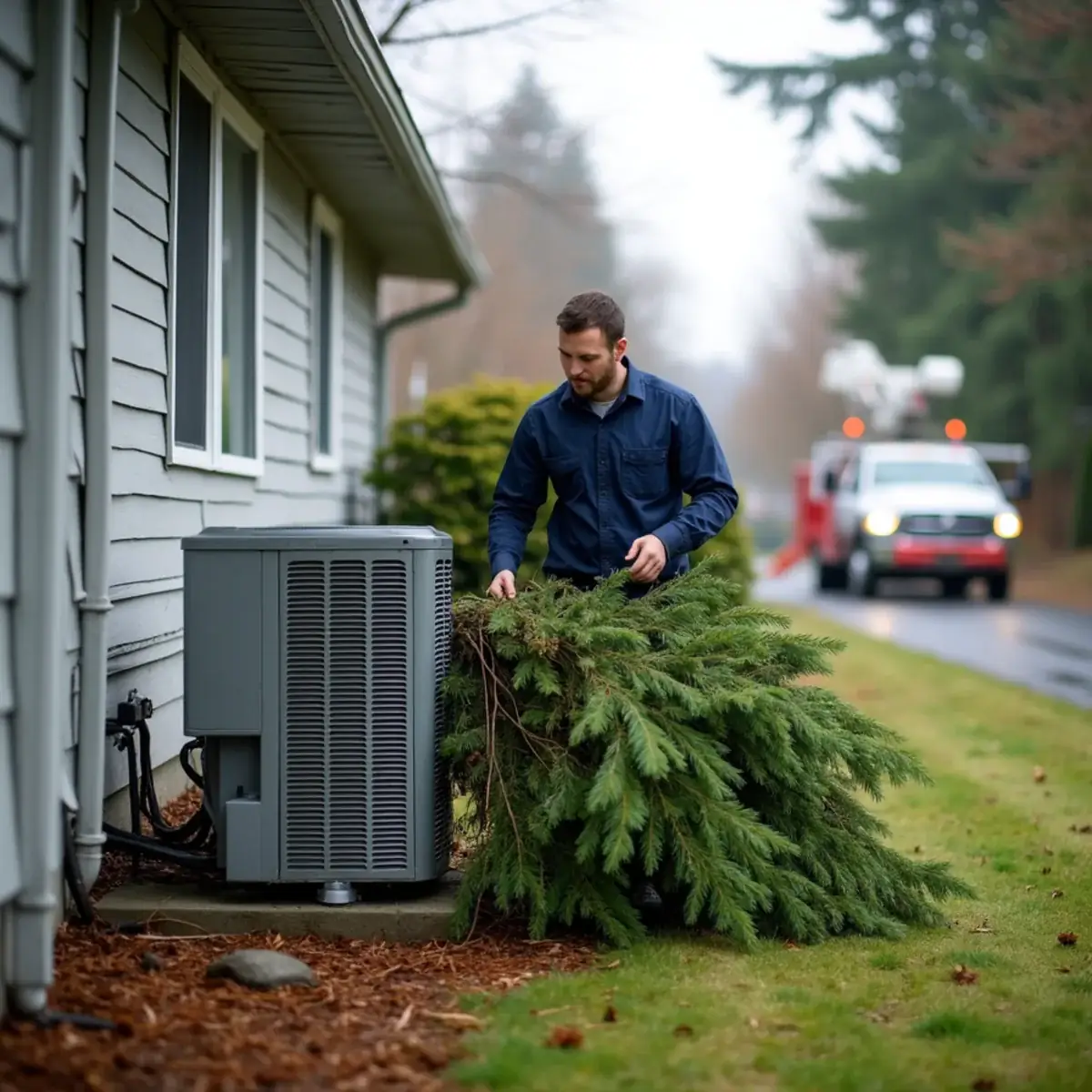
- Once the wind has died down, clear branches, cones and debris from around the outdoor unit. Don’t chip ice off the coil or reach into the fan.
- Keep the unit’s top and sides clear of tarps. It needs airflow the moment it starts.
Restarting a heat pump after a power outage, step by step
Wait until power has been steady for about 15 to 30 minutes before bringing the system back. Then work through this order:
- Restore power, but not heat. Turn the breakers back on and leave the thermostat on Off. This energizes the crankcase heater.
- Give the compressor a warm-up. Many manufacturers call for at least 30 minutes of power before the compressor runs, and some recommend several hours after a long outage in freezing weather. Your installation manual has the exact figure.
- Use Emergency Heat if you need warmth now. It runs the electric heat strips in the air handler without starting the compressor.
- Switch to Heat. Expect a delay of up to five minutes before the compressor starts. That’s a built-in protection, not a fault.
- Reset the clock and schedule. Many thermostats lose their settings, and smart thermostats may need to rejoin Wi-Fi.
What emergency heat really does, and its limits
Emergency heat bypasses the outdoor unit and runs resistance heat strips, typically 10 to 20 kilowatts. It keeps the house warm, but it costs two to three times as much to run as the heat pump. Use it as a bridge for a few hours, not for the rest of the winter.
Generators are a separate question. A portable generator usually can’t carry heat strips, and running the outdoor unit on backup power needs a properly sized generator plus a transfer switch or interlock installed by a licensed electrician. Never backfeed a dryer outlet. It can electrocute a lineworker down the street.
Signs the storm did real damage
If the system doesn’t behave normally after the warm-up, stop and look for these clues:
- The indoor fan runs but the outdoor unit hums and never starts, or the outdoor fan won’t spin.
- The thermostat stays blank even with fresh batteries, which can mean a blown low-voltage fuse on the control board.
- A breaker trips as soon as the compressor tries to start.
- Ice keeps building on the coil and never clears during defrost.
- You smell something hot or electrical near the air handler or outdoor unit.
A typical post-storm call
Here’s what we often find after a windstorm in Port Orchard: power returns, the thermostat calls for heat, the air handler blows cool air and the outdoor unit sits silent. A surge has taken out the run capacitor or burned the contactor. It’s an inexpensive part, but running the system on heat strips for a week while you wait costs more than the fix. If the house is cold and nothing will run, our emergency HVAC repair team can triage it.
If a limb landed on the outdoor unit, photograph it where it fell before you move anything: the cabinet, the fan grille, the coil fins and the insulated copper line set running into the house. Those pictures help a technician judge whether the refrigerant circuit took a hit, and your insurer may ask for them as well.
Don’t bend fins back or tape over a kinked line. A crushed or punctured line set means a refrigerant leak, and recovering and recharging refrigerant is work for an EPA Section 608 certified technician. Once the storm repair is done, a heat pump tune-up before the next windstorm season confirms the charge, defrost operation and electrical connections, and our guide to keeping a heat pump clear of moss and needles covers the upkeep between visits.
From the field
How we diagnose a heat pump that won’t come back after a windstorm
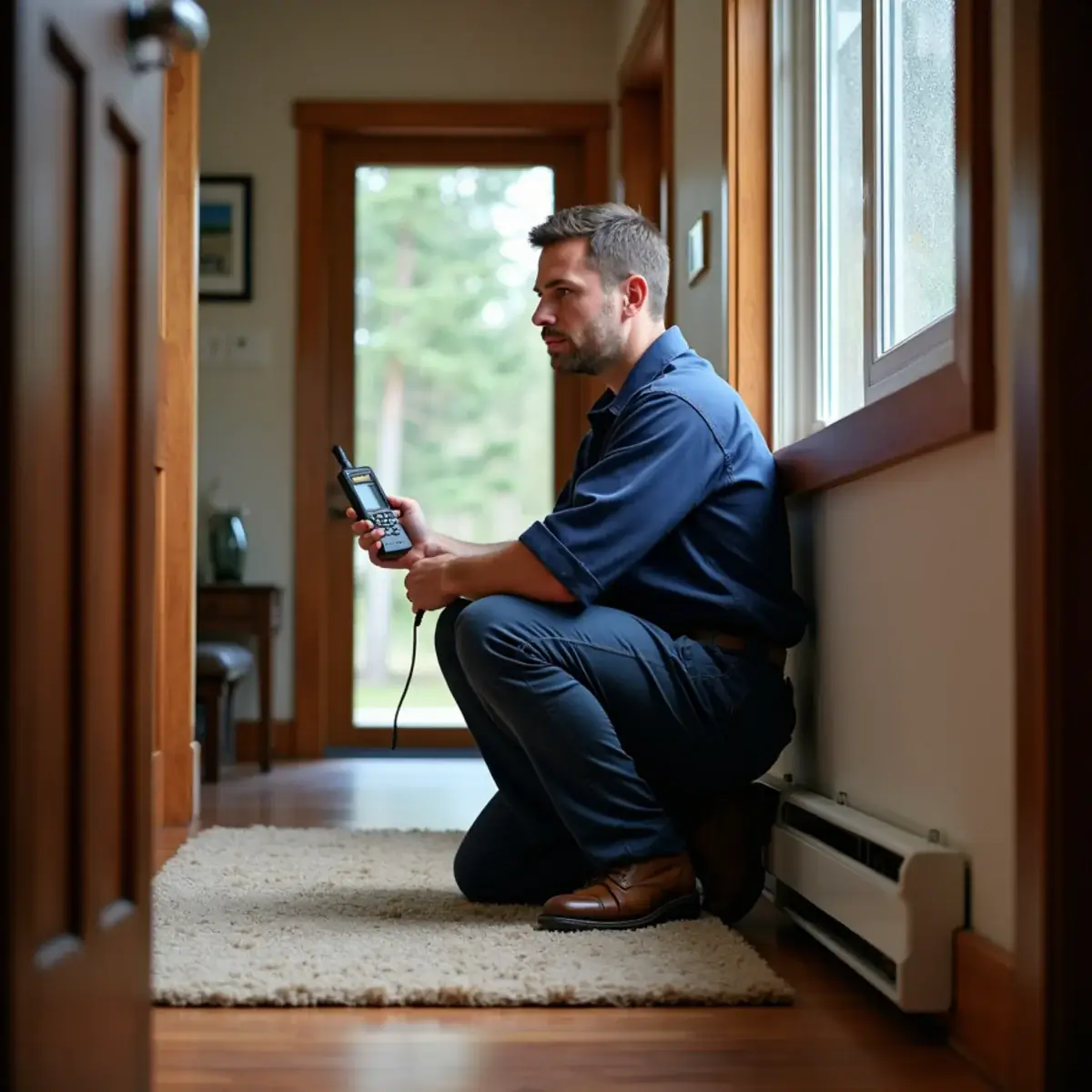
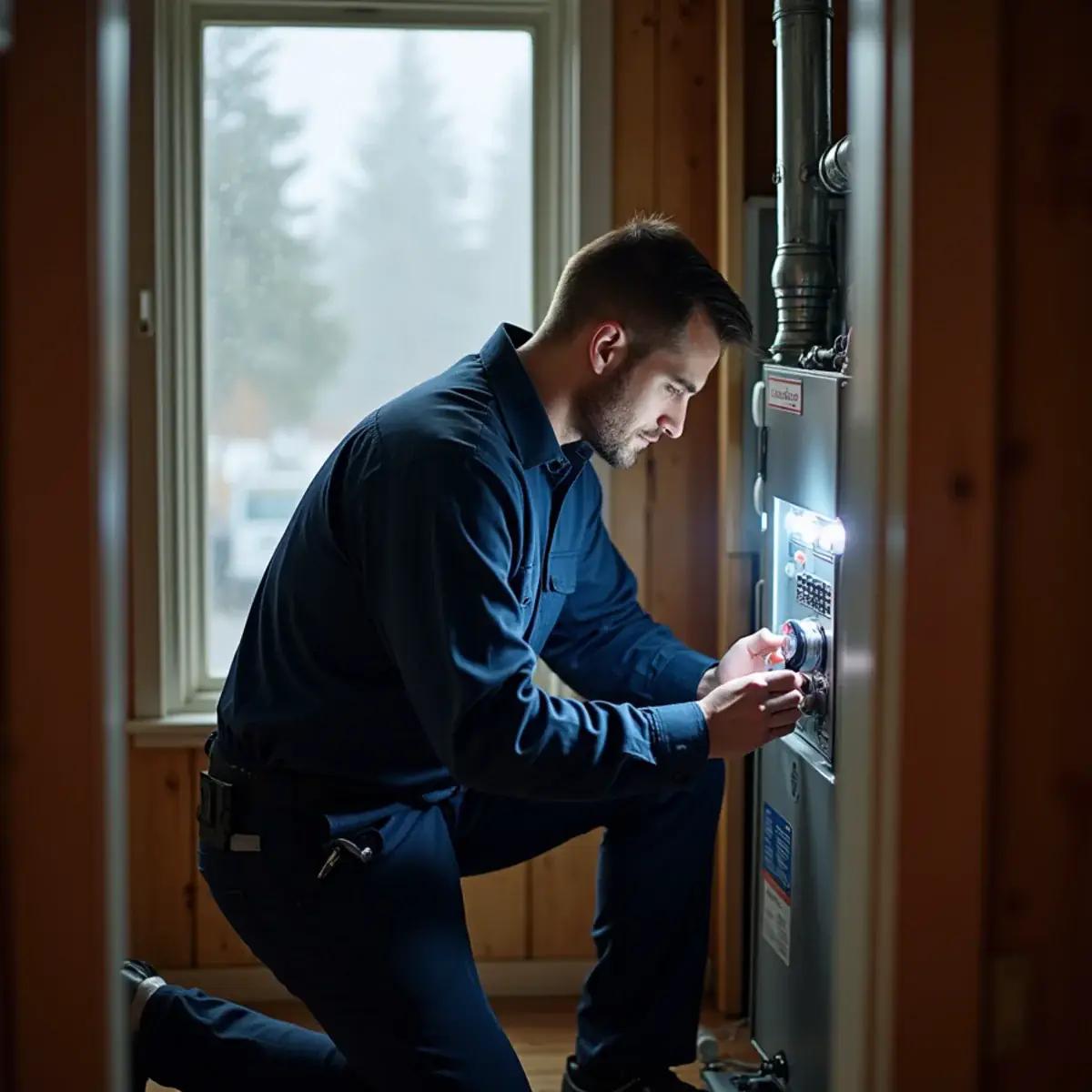
A post-storm heat pump call starts at the outdoor disconnect with a meter, before anyone touches the thermostat. We read line voltage on both legs. When a falling limb damages the service drop, a house can come back with one leg missing or weak, and the outdoor unit hums without starting while the lights inside look normal. That is a utility problem first, and running the compressor on it cooks windings.
With good power confirmed, the usual suspects get measured rather than guessed. The run capacitor is checked against the microfarad rating printed on its label, the contactor points are inspected for pitting, and the low-voltage fuse on the air handler board is tested. Inverter models store fault codes on the outdoor board, which often name the exact sensor or protection that tripped during the surge.
The mistake that costs the most is cycling the thermostat between Heat and Off to see if it catches. Each attempt restarts the protection delay and puts another hard start on a cold compressor.
- Waterfront homes around Manchester lose power often in southerly blows, so a surge device at the disconnect earns its cost there faster than most places.
- A ductless mini-split carries its inverter board outdoors, where a surge can end its season in one hit, so give those units the same warm-up and careful restart.
- If the heat pump restarts but a gas furnace backup won’t light, work through our no-heat checklist for Bremerton homes before calling.
FAQ
Quick answers
Is steam coming off my heat pump after the power came back a problem?
Usually not. In cold, damp weather the outdoor coil frosts over, and the heat pump periodically runs a defrost cycle that melts it. The warm coil meeting cold air produces a cloud of steam and sometimes a whooshing sound. It typically lasts a few minutes. Smoke, a burning smell or constant steam is different and needs a technician.
How long can I run emergency heat?
As long as you need to keep the house safe, but expect higher electric bills while it runs. Emergency heat is meant for short periods when the outdoor unit can’t operate. If you’ve been on it for more than a day or two, have the heat pump checked so you’re not paying resistance-heat rates for a problem that could be fixed quickly.
Should I install a surge protector on my heat pump?
In areas with frequent storm outages, it’s worth considering. A whole-home surge protector at the panel, or a dedicated device at the outdoor disconnect, can absorb some of the spikes that damage capacitors and control boards. It won’t stop every failure, but it’s an inexpensive layer of protection for costly inverter electronics.
Why does my heat pump run but the house won’t warm up after an outage?
The thermostat may have reverted to a default schedule, or the unit may still be in its compressor delay or a long defrost after sitting cold. Give it thirty minutes on Heat. If the registers keep blowing cool air, the outdoor unit stays silent, or the heat strips seem to carry the whole load, a surge may have damaged a capacitor, contactor or control board, and a technician should test it.
Will a ductless mini-split restart on its own after the power comes back?
Many current mini-splits have an auto-restart setting that returns them to the last mode and setpoint when power is restored, but some ship with it disabled and others lose their schedules. The compressor still needs a warm-up. During a long outage, switch off the breaker or outdoor disconnect, restore it first once power is steady, wait, and then turn the indoor heads back on with the remote.
The bottom line
The safe restart comes down to patience. Power first, a warm-up for the compressor, emergency heat in the meantime, then normal heat. That sequence protects the most expensive part of your system during the season when Kitsap loses power most often.
If your heat pump doesn’t come back cleanly after a storm, don’t keep cycling it. Let a technician find the damaged part before a small failure turns into a compressor replacement.
Sources & official references
- U.S. EPA Section 608: refrigerant handling and technician certification
- U.S. Department of Energy Energy Saver: heat pump systems and operation
Programs, rules and fees change. Confirm current details with the source before you act.