Short answer
The most reliable way to heat a Hood Canal cabin year-round is layered: a ductless heat pump for efficient everyday heat, a grid-independent backup such as a millivolt direct-vent propane heater for windstorm outages, and freeze protection with a minimum setpoint, remote alert and drained plumbing for the weeks the cabin sits empty.
Heating a Hood Canal cabin is a different problem from heating a house in town. The place may sit empty for weeks, the power goes out with every good windstorm, there’s no gas main for miles and the nearest supply store is a long drive when something breaks. What works in a Bremerton subdivision doesn’t always work on the canal.
We work on cabins and full-time homes along the south shore near Belfair and around the Great Bend in Union. The most reliable setups we see combine an efficient everyday heat source, a backup that doesn’t depend on the grid, and a solid plan for the weeks nobody’s there.
What makes heating a Hood Canal cabin different
Many cabins started as summer places and were winterized piece by piece. You’ll find single-wall additions, crawl spaces open to the wind, cabins on posts with exposed plumbing, and a patchwork of wall heaters and a wood stove. Add damp air off the water and long outages, and a single heat source becomes a single point of failure.
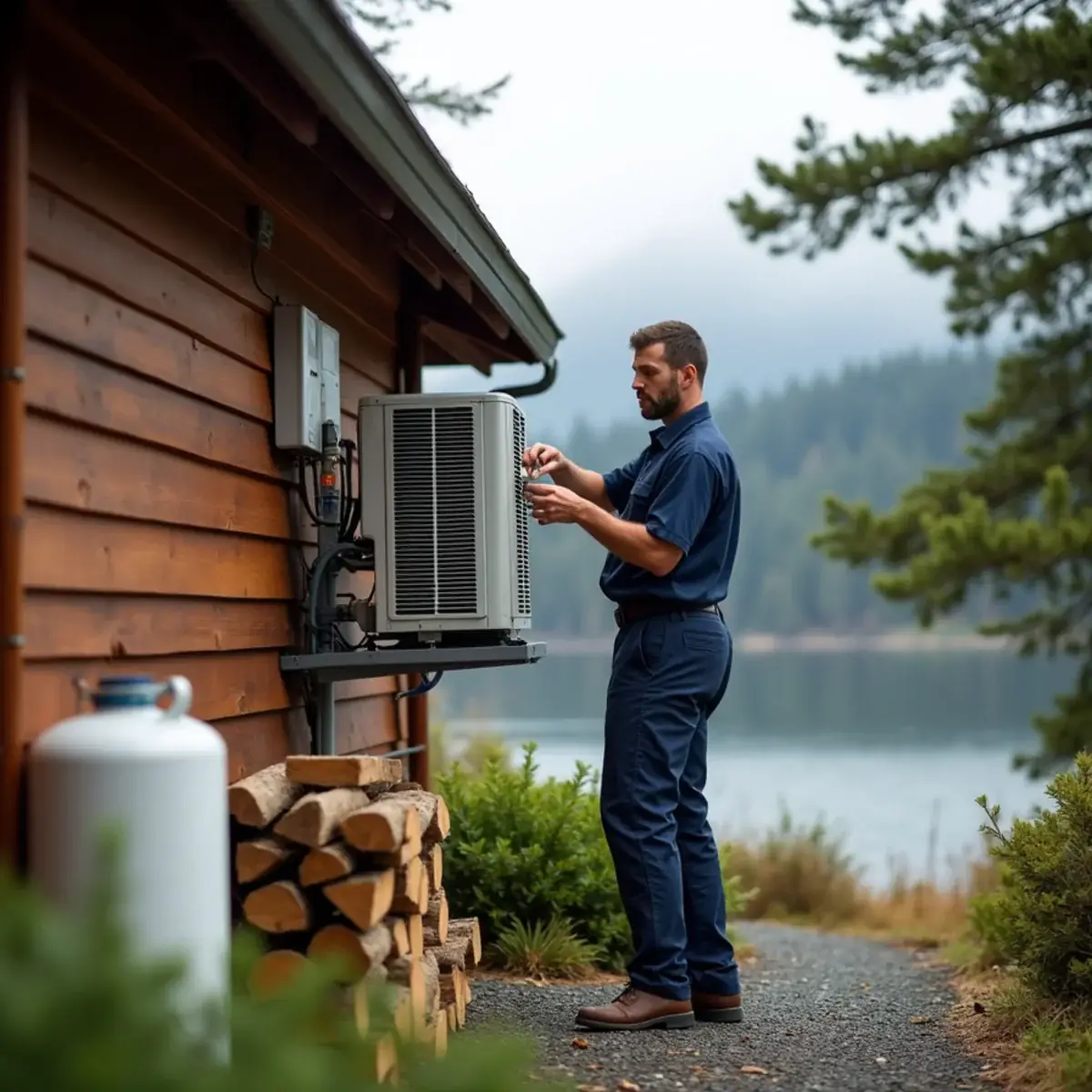
Access shapes the plan too. Many cabins along SR 106 sit at the bottom of steep gravel driveways, a long way from the nearest parts counter. We favor widely supported equipment and place outdoor units where a tech can reach them in January without climbing down a muddy bank. A system that’s easy to service is a system that actually gets serviced.
Ductless heat pumps as the everyday workhorse
For most cabins, a ductless heat pump is the efficient main heat. It needs no ducts, heats and dehumidifies the open living area well, and cools on the few hot afternoons. Many systems can be controlled and monitored remotely over Wi-Fi, so you can warm the place up before the drive out and get an alert if the temperature drops. Some models also offer a low-temperature maintenance mode that holds the space in the mid-40s while you’re away.
A small cabin often needs just one or two zones. Our ductless mini-split installation page covers sizing and placement, and if the cabin has existing ducts, a ducted heat pump installation may be the better route.
For a cabin that must hold temperature through an Arctic outbreak with nobody home, ask about a cold-climate heat pump rather than a standard model. It costs more up front, but it keeps producing useful heat when the teens roll in off the Olympics. Waterfront lots also bring salt spray, so outdoor unit placement and coil protection matter; our guide to salt air and outdoor HVAC corrosion covers what to ask for.
Propane as backup, not always the main event
Propane shines as outage protection. Some direct-vent propane wall heaters and fireplaces use millivolt controls that keep running without household power, giving you heat when the lines are down for two days. Propane can also run a standby generator.
Plan the details: tank size and placement, a driveway a delivery truck can actually climb in January, and properly sized, pressure-tested piping. We handle gas and propane line installation for new appliances and generators.
Freeze protection for the weeks you’re away
Frozen pipes cause more cabin damage than any heating failure. Don’t rely on one heater to protect an empty building through an Arctic outbreak.
- Keep a minimum setpoint on the primary heat, with a Wi-Fi sensor that texts you if it drops
- Shut off the main water valve and drain lines if you’ll be gone for long stretches in winter
- Insulate and heat-trace exposed pipes under cabins on posts or in open crawl spaces
- Close foundation vents in hard freezes if your crawl space design allows it
- Ask a neighbor to check in after big storms and outages
Wood stoves and generators: useful partners
A wood stove is wonderful during an outage and cozy on a wet weekend, but it can’t protect an empty cabin. It also confuses a heat pump head in the same room: the stove warms the sensor, the heat pump shuts down, and back bedrooms go cold. We place heads and thermostats with that in mind.
If you add a generator, size it for the heat pump’s running load plus your well pump and fridge, and have an electrician install a proper transfer switch. Inverter heat pumps start gently, which makes them friendlier to generators than older equipment.
Sizing, wiring and paperwork for a cabin heat pump
Cabins break square-foot rules. A tight new bedroom wing and a drafty 1950s porch room can sit under the same roof, so a Manual J load calculation is the honest starting point, followed by equipment selection that matches it. Older cabins often have small electrical panels, and a heat pump plus a well pump can push one past its limit. A panel check belongs in the first visit, not the install day.
Before work starts, confirm the contractor’s Washington L&I registration, that refrigerant work is done by EPA Section 608 certified technicians, and who is pulling the permit for the heat pump or any new propane appliance. Much of this area falls under Mason County permitting, so ask which office applies to your address.
From the field
From the field: what we check first at a canal cabin
Our first walk-through at a canal cabin starts under the floor, not at the thermostat. We find where the water line enters, how exposed the crawl space or post foundation is, and whether any pipe or duct runs sit in open air. That coldest spot, not the living room, decides how aggressive the freeze plan has to be.
Next comes the panel. We note the service size, the well pump draw and every baseboard or wall heater already on it, because many cabins run close to their limit before a heat pump is added. Keeping a few baseboard circuits for back rooms makes sense, but they need grid power just like the heat pump, so they do nothing in a two-day outage. Our notes on replacing baseboard heat with ductless explain which circuits are worth keeping.
The mistakes we run into most are practical, not exotic:
- A temperature sensor on Wi-Fi alone goes silent when the power and router drop; a cellular or battery-backed sensor keeps reporting
- One oversized head in the great room while closed bedrooms at the far end stay damp and cold
- Condensate lines on post-mounted cabins that drain onto a path or freeze solid in a cold snap
- After a long outage, restarting in the wrong order; our guide to restarting a heat pump after a power outage covers it, and a fall HVAC maintenance visit catches loose brackets and plugged drains while the road is easy
FAQ
Quick answers
What temperature should I leave an empty cabin at in winter?
Many owners hold around 50°F, which protects plumbing with a margin and keeps humidity in check. Some heat pumps offer a maintenance mode in the mid-40s. Whatever you choose, pair it with a remote temperature alert and consider shutting off and draining water for long winter absences, because no heater survives an extended outage.
Can a ductless heat pump run on a generator?
Yes, if the generator is sized for it and connected through a proper transfer switch. Inverter-driven heat pumps ramp up gradually, so their startup demand is modest compared with older equipment. Add the heat pump’s running load to your well pump, refrigerator and lights, and have an electrician confirm the sizing before you buy.
Is propane or a heat pump cheaper for a Hood Canal cabin?
For everyday heating, a well-sized heat pump is usually cheaper to run than propane in our mild climate. Propane earns its place as outage backup and for appliances that run without power. Many cabin owners end up with both: a heat pump for daily heat and a direct-vent propane heater for storms.
Does a Hood Canal cabin need a cold-climate heat pump?
Not always. A standard heat pump handles most of our mild, wet winter. A cold-climate model earns its higher price when the cabin sits empty through cold snaps, has limited backup heat or sits in a shaded, exposed spot. A load calculation and an honest look at how you use the place should decide it, not a sales sheet.
Can I keep my cabin’s electric baseboard heaters after adding a ductless heat pump?
Yes, and many owners do. The heat pump carries the everyday load while a few baseboard heaters stay on for back bedrooms or a bathroom the indoor head can’t reach. Set their thermostats a few degrees below the heat pump so they only run when needed. Baseboard heat still needs grid power, so it is not outage backup; a millivolt propane heater or wood stove fills that role.
The bottom line
The cabins that ride out winter best have layers: efficient everyday heat, a backup that doesn’t need the grid, and freeze protection that doesn’t depend on anyone being there. Get those three right and a Hood Canal place becomes a true year-round retreat.
If you’re planning upgrades before the storm season, we’re glad to make the drive, look at your cabin and suggest a setup that fits how you actually use it.
Sources & official references
- Washington L&I: contractor registration and licensing
- EPA Section 608: refrigerant handling and technician certification
- ACCA standards: Manual J, Manual D and Manual S
- U.S. Department of Energy Energy Saver: heating and cooling
Programs, rules and fees change. Confirm current details with the source before you act.